

photo: Michael Justin
2025 TOP 20s
The categories in this year's roundup reflect textura's current focus on classical, jazz, and ambient genres. As in the past, choices were made in accordance with a simple principle: only those releases reviewed at textura during 2025 were eligible. Here, then, are the recordings to which we repeatedly returned and which repeatedly rewarded that return. Slightly modified excerpts from the original reviews, available in their complete form at textura's archives, have been included for the eight top selections in each category.
TOP 20 CLASSICAL (VOCAL) • TOP 20 CLASSICAL (INSTRUMENTAL: Solo / Duet / Trio) • TOP 20 CLASSICAL (INSTRUMENTAL: Quartet / Ensemble / Orchestra) • TOP 20 JAZZ • TOP 20 AMBIENT / ALTERNATIVE • THANK YOU • RIP
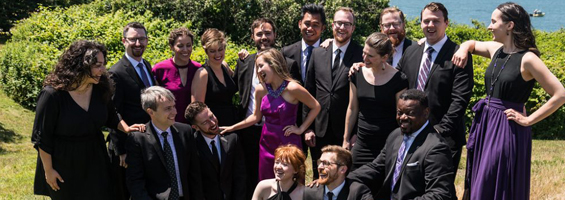 photo: Skylark
 TOP 20 CLASSICAL (VOCAL)
01. Skylark: Songbird (HMR)
Skylark fans have cause to rejoice: earlier this year, shades of blue, a full album of choral music by the Belgian-American composer Mark Van Overmeire, appeared, and now the multiple Grammy-nominated group celebrates its fifteenth anniversary with Songbird. At the release's centre is the world premiere recording of Benedict Sheehan's Songbird Antiphons, which both honours the splendour and diversity of bird species and laments the fact that, in the words of Skylark Artistic Director Matthew Guard, “North America has lost almost 30% of its native songbird population since 1970 due to human activity,” an environmental tragedy of monumental proportions. As powerful as that song cycle is, the album's as notable for riveting renditions of James MacMillan's The Gallant Weaver, “Shenandoah,” the bluegrass hymn “Angel Band,” and Caroline Shaw's and the swallow. There's no shortage of vocal ensembles operating at present, but with Songbird, Skylark vaults to the forefront.
02. Karina Canellakis, Netherlands Radio Philharmonic Orchestra: Bartók: Duke Bluebeard's Castle (Pentatone)
Drenched in atmosphere and texture, Bartók's Duke Bluebeard's Castle, a masterful exercise in tone painting and mood building, remains gripping a century after its creation. What argues in this latest treatment's favour? Given the terrific, Grammy-nominated recording of the composer's Concerto for Orchestra Karina Canellakis issued with the Netherlands Radio Philharmonic Orchestra on Pentatone in 2023, the orchestra's Chief Conductor is becoming something of a Bartók expert. Her rendition is nuanced, and the recording quality and production values top-notch. Arguing in its favour too is the inclusion of the spoken prelude, which primes us for the story to come and which not every version includes. Mezzo-soprano Rinat Shaham (Judith) and bass-baritone Gabor Bretz (Bluebeard) distinguish their parts, sung in Hungarian, with emotionally invested performances, and the NRPO is splendid. Perhaps more than anything else, this latest treatment speaks to the continuing vitality of Bartók's creation and its continuing capacity for spellcasting.
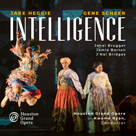
03. Jake Heggie & Gene Scheer: Intelligence (Houston Grand Opera • LSO Live)
When “A Black Spy in the Confederate White House,” a 2012 New York Times op-ed by Lois Leveen, was brought to the attention of San Francisco-based composer Jake Heggie and librettist Gene Scheer in 2015, they knew they'd found the subject matter for their next opera. Of course Heggie's best known for Dead Man Walking (2000), its libretto by Terrence McNally, but the operas he's created with Scheer—Three Decembers (2008), Moby-Dick (2010), It's a Wonderful Life (2016), and now Intelligence (2023)—have also been warmly received. Infused with urgency, Heggie's music mirrors the emotional twists and turns of the action, playful at one moment and yearning at another. Blues, folk, gospel, and jazz blend seamlessly with classical as the splendidly orchestrated score draws on a panoply of moods and styles. Lamenting and tumultuous passages are abundant in this gripping work, and tuneful melodies and motives are likewise plentiful, with many resonating long after the opera's finished.
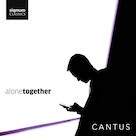
04. Cantus: Alone Together (Signum Classics)
When Cantus first formalized the concept for Alone Together in 2016, the eight-member vocal ensemble intended to focus on the harmful effects of cell phone culture and social media. That concept underwent revision, however, when the pandemic made technology a critical means for maintaining community and relationships. Notwithstanding that shift, Alone Together explores issues of isolation and connection, not only in works by contemporary artists but also ones from decades and even centuries past. It's the kind of album where songs by Arcade Fire and The Beatles sit comfortably alongside pieces by Camille Saint-Saëns and Beethoven. The album ends with the ebullient “When We Sing” to send listeners away buoyed by hope, harmony, and joy. Certainly one of the song's instructive messages has to do with the value of, to paraphrase Arcade Fire, putting “the cell phone down for a while” and engaging in the spiritual replenishment of communal expression.
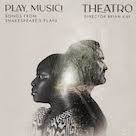
05. Theatro: Play, Music! Songs from Shakespeare's Plays (Avie)
Play, Music! is a tremendous accomplishment on multiple grounds. In having been recorded over four years and involving more than twenty musicians and singers across the globe, the album's creation posed logistical challenges that the early-music-meets-early-theatre group Theatro and its Artistic Director Brian Kay successfully overcame. Kay's contention that the release speaks to “the resilience and creativity of artists coming together to build something truly beautiful in the face of adversity” is borne out by the result. English teachers introducing Shakespeare to high school students for the first time would no doubt love to have Theatro join their classes to show how exciting and alive his plays can be when not just silently read. Certainly the group's enthusiastic presentation of material from his comedies and dramas would go a long way towards winning young minds over.
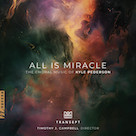
06. Transept: All Is Miracle: The Choral Music of Kyle Pederson (Navona Records)
As it builds its discography, a vocal ensemble will occasionally deviate from releases featuring works by multiple composers to ones presenting material by single figures. Operating out of the Sioux Falls area, Transept does precisely that on All is Miracle, a superb collaboration between the award-winning vocal outfit and the Minneapolis-based Kyle Pederson. While Transept's repertoire extends from contemporary choral pieces to plainchant and Renaissance masterworks, the album in no way suffers in limiting its focus to one composer. The hymn “A Mighty Fortress is Our God” is strikingly reimagined, while the familiar spiritual “Were You There” arrests in a bold new arrangement. Pederson's music has been called “inspirational, moving, and spiritual” (American Prize), and Transept amplifies all such facets of his music with this uplifting expression.
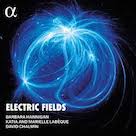
07. Barbara Hannigan, Katia and Marielle Labèque, David Chalmin: Electric Fields (Alpha Classics)
Soprano Barbara Hannigan builds on her singular discography by partnering on this project with French multi-instrumentalist David Chalmin and pianists Katia and Marielle Labèque. Anyone who's followed the trajectory of Hannigan's career will recognize Electric Fields as one more wildly imaginative recording to add to the ones before it. This is, after all, an artist whose output features material by Berg, Mahler, Messiaen, and Schoenberg, and includes Dance With Me, a song-based set extending from Kurt Weill to Barry Manilow. If there's a release that captures her different sides, it's probably 2017's Crazy Girl Crazy for coupling Berg and Berio with Gershwin. Here, the Labèques are unerring as always, Chalmin distinguishes himself as a sonic colourist par excellence, and Hannigan is, as ever, a wonder to behold. Her description of the set as “an intense and unique cosmos of sound” isn't off-base, and as the recording works its way through nine diverse parts it takes on the character of a fantastical odyssey.
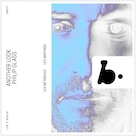
08. Les Métaboles: Another Look: Philip Glass & Andrea Basily (b•records)
Having conducted Akhnaten, Satyagraha, and Einstein on the Beach, Léo Warynski's no stranger to Philip Glass's music. Yet while that opera trilogy is well-established, Another Look at Harmony – Part IV (1975) is less familiar and little-performed, which makes this recording by the vocal ensemble Les Métaboles, founded by the Paris Conservatoire-trained Warynski in 2010, all the more valuable. Paired with the Glass work is one by Andrea Basily (1705-77), Canone a 16 all' unisono, which despite having been written centuries before the other, complements it excellently. The transition from Glass to Basily also makes for an effective pairing when the former's incremental journey toward paradise carries over into the canon, which the conductor refers to as “a kind of angels choir, perfect, cyclical music that turns almost magically.”
09. Skylark: shades of blue: Choral Music of Mark Van Overmeire (Kramúsica Records)
10. Will Liverman: The Dunbar/Moore Sessions: Complete Collection (Lexicon Classics)
11. Shawn E Okpebholo: Songs in Flight (Cedille Records)
12. Krešimir Stražanac & Doriana Tchakarova: Schubert; Allitsen: Schwanengesang (Hänssler Classic)
13. Morten Lauridsen / Jake Runestadt: Lux Aeterna; Earth Symphony (BR Klassik)
14. New York Festival of Song: Schubert Beatles (NYFOS)
15. Cathedral Choral Society: Reena Esmail: Exaltations (Acis)
16. Caritas Chamber Choir: A New Spirit (Ulysses Arts)
17. Sarah Moulton Faux & Konstantin Soukhovetski: Yuliya: Forgotten Songs of Julia Weissberg Rimsky-Korsakov (Azica Records)
18. Zoltan Darago, Christophe Rousset, Les Talens Lyriques: Bach: Arias for Alto (Aparté)
19. Harry Baechtel & Chuck Dillard: Forgotten Spring: The Early Lieder of Fanny Hensel (Acis)
20. Florence Beatrice Price: Choral Works (Naxos)

TOP 20 CLASSICAL (INSTRUMENTAL: Solo / Duet / Trio)
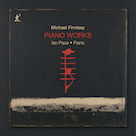
01. Michael Finnissy: Piano Works (Métier)
Métier describes Ian Pace's collection of piano works by Finnissy as a “landmark” recording, and for once the term's justified. Pace has achieved something remarkable in presenting four CDs of material by the British composer, the pianist's commanding performances weighing in at almost five hours and complemented by a fifty-two-page booklet featuring commentaries by Finnissy and Pace. Dominating the collection is Finnissy's second epic cycle for piano, the four-book Verdi Transcriptions, with the second complete recording of English Country-Tunes (after the composer's own version) and works inspired by music of the late-eighteenth and nineteenth centuries rounding out the release. Issued in anticipation of Finnissy's upcoming eightieth birthday, Piano Works qualifies as a triumph.
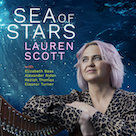
02. Lauren Scott: Sea of Stars (Avie Records)
An indispensable addition to any harp lover's library, Scott's Sea of Stars is a splendid sequel to her debut outing Beyond the Horizon. Amplifying its appeal, Sea of Stars not only showcases Scott's prowess as a performer and arranger but as a composer when the release features her own exquisite originals alongside ones by Grace Evangeline Mason, Rudiger Opperman, and Monika Stadler. Add to that treatments of material by Ravel and J. S. Bach and two beloved traditionals and the result is a must-have for any harp aficionado. BBC Music Magazine's description of the album as “somewhat revelatory” isn't, it turns out, hyperbolic.
03. Ashley Jackson: Take Me to the Water (Decca Records)
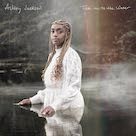
The cover image and title of harpist Ashley Jackson's absorbing Take Me To The Water naturally engender thoughts about baptism, rebirth, and healing, and the collection lives up to its billing as an "exploration of the transformative and spiritual power of water” when many of the works reference it in their titles. In her thoughtfully curated programme, Jackson pays homage to Margaret Bonds, Samuel Coleridge-Taylor, and Claude Debussy, and honours harpists Alice Coltrane and Brandee Younger by including performances of their works, with Jackson herself contributing a composition too. Pieces by João Luiz Rezende and Jeremy Charles Thomas also appear, as do traditionals that bolster the reverential tone of this deeply personal project.
04. Tim Rumsey: Transcriptions (Luminate Records)
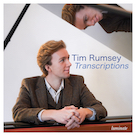
To say that listening to Rumsey's solo piano performances of existing transcriptions along with ones of his own is a genuine pleasure is a huge understatement. His command of the keyboard, sensitivity to pacing and articulation, and inspired curatorial choices make this hour-long debut thoroughly satisfying. It's one thing to play an existing transcription, it's quite another to produce one of your own, and in creating his Rumsey developed an enhanced appreciation for the originals. One clearly hears in his transcriptions the care with which Rumsey preserved the spirit of the Dukas, Purcell, and Walton pieces and honoured their work in the process.
05. Florian Verweij: Sonorités De Paris (Gutman Records)
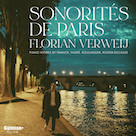
In fashioning his debut album around piano music associated with the Belle Époque (1871-1914), Dutch pianist Florian Verweij could have assembled a set-list featuring Ravel, Debussy, Fauré, and Franck. Yet while selections by the latter pair do grace his collection, to his credit Verweij made less predictable choices when it came to completing the programme. In an inspired move, he elected to couple pieces by Gabriel Fauré and César Franck with ones by Lili Boulanger and, most importantly, the unjustly neglected Jean Roger-Ducasse. The physical package captures the Romantic glory of Paris in photographs, and the twenty-eight-page booklet enhances the release with commentaries and extra photos.
06. Seán Doherty: The Devil's Dream (Métier)
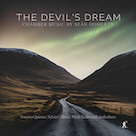
The life of composer Seán Doherty has developed along two equally critical paths, on one side formal studies that culminated in a PhD in musicology at Trinity College Dublin and his current position as an assistant music professor at Dublin City University, on the other the sensibility that crystallized through exposure to the Irish fiddle tradition of his Derry hometown. As Doherty himself acknowledges, he is, “at heart, a fiddle player” whose native tongue is Irish traditional music. Having learned from teachers in both traditional and classical music, it's only natural for him to express himself through their combination. Doherty's music is never less than compelling and imaginative, and his highly personalized coupling of history and contemporary compositional practice is original. The evidence at hand shows him to be one of Ireland's most exciting contemporary composers.
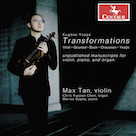
07. Max Tan: Ysaÿe: Transformations (Centaur Records)
Transformations warrants attention for a number of reasons, beginning with the presentation of premiere recordings of unpublished arrangements by Belgian violinist Eugène Ysaÿe of violin repertoire transcribed for violin, piano, and organ. The performances themselves, by Taiwanese-American violinist Max Tan, pianist Marisa Gupta, and organist Chris Yuejian Chen, are a major selling-point for the recording, not only for showcasing their rapport but for offering one example after another of the sumptuous and rhapsodic playing for which Tan's known. Transformations is noteworthy also for raising fascinating questions about the interpretation of a work's score and the authorial relationship that can develop between performer and composer as a particular work is created.
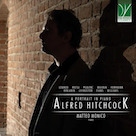
08. Matteo Monico: Alfred Hitchcock: A Portrait in Piano (Da Vinci Classics)
There have been many iconic film director-and-composer pairings, but none is greater than Hitchcock and Bernard Herrmann. The music he created for Psycho, Vertigo, and North By Northwest is the gold standard, even if the composer contributed to a great many more of the director's projects than those three. In fashioning an album-length Hitchcock portrait, it would have been easy for Matteo Monico to assemble a programme featuring Herrmann exclusively, yet the pianist created something more interesting by including other composers too. To that end, the portrait includes selections from the aforementioned trio, Herrmann material from The Trouble with Harry, The Wrong Man, and Marnie, and pieces by Arthur Benjamin, Charles Gounod, Francis Poulenc, Franz Waxman, Jay Livingston, Miklos Rozsa, and John Williams.
09. Anna Lapwood: Firedove (Sony Classical)
10. Douwe Eisenga: Another Month Another Year (Butler Records)
11. Kristjan Martinsson: 1035 (TRPTK)
12. Opus Two: Celebrates Stephen Sondheim: New Chamber Music Arrangements (Bridge Records)
13. Victoria Terekiev: Matryoshka: Piano Music for Children: Tchaikovsky, Prokofiev, Shostakovich (Da Vinci Classics)
14. Kristina Marinova: The Bus Came By and I Got On: Grateful Dead Piano Works (Navona Records)
15. Anastasiia Larchikova & Mykhailo Diordiiev: Four Hands. Two Hearts. One Hope (Reference Recordings)
16. Peter Garland: Plain Songs (Cold Blue)
17. Klavierduo Stenzl: Grand-Mondain (Genuin)
18. William Hobbs: Orbiting Garden (Blue Griffin)
19. Eric Zuber & Boris Slutsky: Two for Rachmaninoff (Azica Records)
20. Duo Concertante: Alice Ping Yee Ho: Dark Tales (Navona Records)

TOP 20 CLASSICAL (INSTRUMENTAL: Quartet / Ensemble / Orchestra)
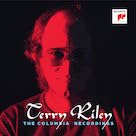
01. Terry Riley: The Columbia Recordings (Sony Classical)
The reissue of Riley's Columbia recordings in a handsome four-disc box set invites a new appreciation of the hugely influential work the American visionary produced between 1968 and 1980. Included with the landmark ensemble piece In C are A Rainbow in Curved Air, Church of Anthrax (his John Cale collaboration), and Shri Camel, each significant in its own right. It's no exaggeration to say that In C in particular exerted a profound and irrevocable impact on the direction contemporary music took after its release, not to mention the pivotal part it played in the emergence of classical minimalism. Enhancing the box set is a fifty-page booklet containing archival photographs, reprints of essays and notes from the original vinyl releases, and multiple commentaries. Maverick, iconoclast, pioneer—all such apply to the now ninety-year-old Riley, whose life as a composer might be seen by others as a template worth replicating.
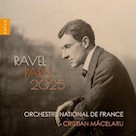
02. Orchestre National de France & Cristian Macelaru: Ravel Paris 2025 (Naïve Classiques)
No orchestra's interpretation of a composer's material is ever definitive, yet it would be hard to imagine another bettering the Orchestre National de France's triple-disc set of works by Ravel. With its Music Director Cristian Macelaru conducting, the orchestra celebrated the 150th anniversary of the composer's birth by presenting his major orchestral works at an early 2025 Ravel festival in Paris. This three-hour document of the shows includes Ma Mère l'Oye, Le Tombeau de Couperin, and the complete Daphnis et Chloé, plus renditions of La Valse, Une barque sur l'océan, Pavane pour une infante défunte, Alborada del gracioso, Rapsodie espagnole, and Boléro. Adding to the release's appeal, Le Tombeau de Couperin is presented not in its customary form but in a six-part version that follows the order of the original piano suite and includes David Molard Soriano's 2021 orchestrations of its second and sixth parts.
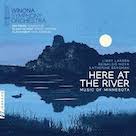
03. Winona Symphony Orchestra: Here at the River (Navona Records)
No better argument on behalf of Minnesota could conceivably be made than this collection by the Winona Symphony Orchestra and its Artistic Director Erik Rohde. The natural splendour of the state's trees, lakes, rivers, and islands is resoundingly captured in renditions of material by Libby Larsen, Reinaldo Moya, and Katherine Bergman. Bookending Moya's triple-movement Minnesota Suite and Bergman's Superior, a short tone poem inspired by the Great Lake, are two works by Larsen, from 2002 the three-part Raspberry Island Dreaming and 2023's single-movement Emergency Haying. Whereas the central works are instrumentals, Larsen's include vocalists, with mezzo-soprano Clara Osowski elevating the opener and bass-baritone Alan Dunbar the other. One comes away from this recording eager to visit the Minnesota region and experience its breathtaking landscapes first hand.
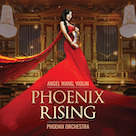
04. Angel Wang & Phoenix Orchestra: Phoenix Rising (Leaf Music)
On Phoenix Rising, Chinese-born Canadian violinist Angel Wang, conductor Claudio Vena, and the Phoenix Orchestra frame endearing renditions of traditional Chinese songs with a ravishing performance of He Zhanhao and Chen Gang's beloved Butterfly Lovers Concerto and the 2023-commissioned titular work by esteemed Canadian composer Alice Ping Yee Ho. Symmetrically structured, the recording presents a splendid convergence of Chinese and Western classical material. Ho's single-movement tone poem for solo violin and orchestra received its world premiere at Toronto's Koerner Hall in December 2023. Written specifically for Wang, Phoenix Rising provides a captivating conclusion to the release, Ho's eleven-minute piece a seamless blend of old and new and thus emblematic of the album in general.
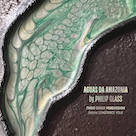
05. Third Coast Percussion: Philip Glass: Águas da Amazônia (Rockwell Records)
With Aguas da Amazonia, Chicago-based Third Coast Percussion presents a brilliant treatment of a Philip Glass work earlier recorded by the Brazilian outfit Uakti. The TCP arrangement is so inspired a re-imagining, however, that it feels like an entirely new creation, and, further to that, registers as a near-perfect rapprochement between composer and performer. Adding significantly to the group's rendition, the recording augments the quartet with flutist Constance Volk, whose terrific contributions amplify the work's haunting character. Laid down over three days in August 2024, the recording shows the musicians to be completely in sync with the composer, the result a must-have for Glass aficionados.
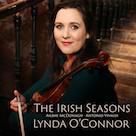
06. Lynda O'Connor: The Irish Seasons: Ailbhe McDonagh • Antonio Vivaldi (Avie Records)
It's telling that Irish violinist Lynda O'Connor titled her album The Irish Seasons rather than The Four Seasons, despite the fact that Vivaldi's beloved warhorse precedes Ailbhe McDonagh's and is also twice its length. The gesture speaks to O'Connor's high regard for the riveting violin concerto crafted by the Irish composer (b. 1982) in response to her Italian Baroque counterpart's opus. On O'Connor's debut solo album, the world-premiere of The Irish Four Seasons synthesizes Baroque style and Irish culture in a riveting manner, and McDonagh has accomplished something quite remarkable in so deftly honouring Vivaldi whilst at the same time weaving Ireland's musical heritage into the writing. O'Connor is a marvel throughout, and the fifteen players of Anamusmatch her step for step.
07. Thomas Adès: The Exterminating Angel Symphony / Violin Concerto (Pentatone)
It's fitting that the performances by Thomas Søndergård and the Minnesota Orchestra of material by Adès should be so electrifying when the composer himself has been a similarly electrifying presence since bursting onto the scene decades ago. His audacious sensibility and singularity of voice were in place from the outset, the preternatural maturity of his first opera, the smash Powder Her Face (1995), an early illustration of his gifts. How wonderful it is, then, to be presented with two splendid samplings of his work, Violin Concerto (2005), now a staple of the contemporary repertoire, and The Exterminating Angel Symphony (2020), the work drawn from the composer's 2016 operatic treatment of Luis Buñuel's cult 1962 film. Enhancing the recording's impact is its length, with a forty-minute running time refreshing for being so concise. As Søndergård astutely notes, Adès possesses a “specific voice where you have no doubt whose music you are hearing” and has the ability to take the listener “from one place entirely to another, sometimes in just a few minutes.”
08. Wisconsin Chamber Orchestra: Convergence (Albany Records)
The performances on this live recording by the Andrew Sewell-conducted Wisconsin Chamber Orchestra (WCO) certainly recommend the release, but Convergence is distinguished even more by inspired programming. Curated by Bill Banfield (its 2021–2024 ‘Composer in Residence') and formally a chapter in the five-year ‘Musical Landscapes in Color' initiative undertaken by the company to accentuate work by living composers, Convergence presents an exciting set-list of material by Michael Abels, Valerie Coleman, Andre Myers, and Patrice Rushen. All are long-time colleagues and friends of Banfield's, but beyond that these American composers are differentiated by their personal signatures as artists. Their talents do literally converge, however, in being gathered together on this rewarding collection.
09. Kevin Puts: Concerto For Orchestra, Silent Night Elegy, Virelai (Delos)
10. Orchestre symphonique de Montréal: Berlioz: Le carnaval romain & Symphonie fantastique (Pentatone)
11. Joel Puckett: Short Stories In London (Avie Records)
12. Michael Kurek: Symphony No. 3: “English” (Navona Records)
13. Miró Quartet & Kiera Duffy: Ginastera String Quartets (Pentatone)
14. Danish String Quartet: Keel Road (ECM New Series)
15. Laurie Christman: Running With Horses (Navona Records)
16. Yale Symphony Orchestra: American Folklore (Waystone)
17. Michael Daugherty: Blue Electra (Naxos)
18. National Arts Centre Orchestra: Poema: 2. Terra Nova (Analekta)
19. Stephen Horne: The Manxman (Ulysses Arts)
20. United Strings of Europe: Hommages (BIS)
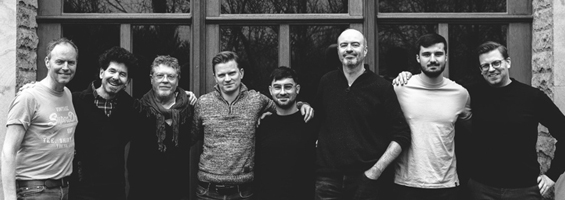 photo: The New York Second
TOP 20 JAZZ

01. The New York Second: Room for Other People (TNYS)
Dutch pianist Harald Walkate made a brilliant decision when he decided to fashion his group's fifth album after the photography of Vivian Maier, the so-called ‘Nanny Photographer.' In drawing for inspiration directly from her images, the interpretations on Room For Other People call forth terrific treatments by The New York Second. Together since 2015, his Netherlands-based jazz ensemble has performed and recorded as a quartet, quintet, septet, and trio, but given the evidence at hand it's the new release's octet formation that is best suited to Walkate's music. The range of timbres an octet affords dovetails perfectly with his cinematic material, and the coupling of American vibraphonist Rob Waring with some of the Netherlands' finest musicians make for compelling results.
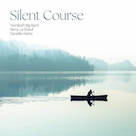
02. Nordkraft Big Band, Remy Le Boeuf, & Danielle Wertz: Silent Course (Gateway Music)
If ever a collaboration was destined to happen, it's the one involving vocalist Danielle Wertz and saxophonist Remy Le Boeuf. Their chemistry was clear the moment their stars aligned at a 2023 Denver release show for her album Other Side and was further cemented when she joined his Assembly of Shadows for a Jazz Gallery performance and contributed to the group's 2024 album Heartland Radio. Things moved to a higher level when Le Boeuf, newly ensconced as Chief Conductor of the Denmark-based Nordkraft Big Band, invited her to participate in the group's next project, one vocal-based and thus naturally geared to her talents. Silent Course is a release where credit is shared equally between the three parties and deservedly so when all are integral to its effect.
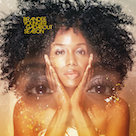
03. Brandee Younger: Gadabout Season (Impulse!)
On Gadabout Season, Younger not only plays the harp that belonged to Alice Coltrane (and of which, after restoration, she became last year its custodian) but also gravitates towards the style of spiritual jazz associated with the legend. All of which is good news for fans who see Younger as a natural successor to Coltrane and Dorothy Ashby. Those pioneers laid the groundwork for Younger to build upon, and she honours their legacies with this strong release, her third for the legendary Impulse! imprint. While there are guests, the music's perhaps most rewarding when it features Younger in a trio context, and for the most part the album's peaceful and introspective and all the better for it.
04. Renee Rosnes: Crossing Paths (Smoke Sessions Records)
Whereas many a North American jazz listener enters the portal of Brazilian music via Antônio Carlos Jobim, the pivotal moment for pianist Rosnes was hearing Wayne Shorter's 1975 album Native Dancer, the saxophonist's iconic collaboration with Milton Nascimento. The sultriness of the music and seductive allure of his voice captivated the pianist and prompted her to seek out in turn other Brazilian greats, including singer Elis Regina. Reflecting on the indelible impact her music had on the pianist, Rosnes acknowledges that she discovered many of the songs and composers on Crossing Paths through Regina's recordings. The intoxicating set is both a major accomplishment by Rosnes and a high watermark in her career.
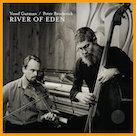
05. Yosef Gutman Levitt & Peter Broderick: River of Eden (Soul Song Records)
Yosef Gutman Levitt has collaborated, separately, on earlier releases with guitarists Lionel Loueke, Gilad Hekselman, and Itay Sher, but his latest, filled as it is with music of grace, dignity, and majesty, suggests the bassist might have found his ideal partner in Peter Broderick, the multi-instrumentalist and singer-songwriter who's released solo material on Hush Records, Erased Tapes, Bella Union, and others. An ex-member of the Danish band Efterklang, Broderick, originally based in Oregon and now Ireland, plays violin, his primary instrument, on the luminous River of Eden, though he also enhances the material with painterly effects.
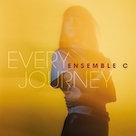
06. Ensemble C: Every Journey (Adhyaropa Records)
Though her image adorns the outer panels of Every Journey, Claire Cope's listed on the back cover as no less or more important than the other ten players—even if a credit in smaller type cites her as the album's sole composer. But make no mistake: with Cope as the writer, arranger, pianist, and bandleader, Every Journey is her project and a tremendous realization of her vision. The album arrives five years after Ensemble C's debut Small World and brings with it a significant advance in those aforementioned facets. Having expanded the group from seven to eleven pieces, Cope here explores a greater range of timbral possibilities and refines her identity as a composer.
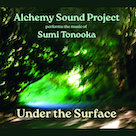
07. Sumi Tonooka & Alchemy Sound Project: Under the Surface (ARC)
Building on a title concept that references the way trees connect underground, Philadelphia-based pianist Tonooka accomplishes something similar in the deep connections she fosters with two musical communities on Under the Surface. Some of the tracks are incendiary trio statements with bassist Gregg August and drummer Johnathan Blake, the others performances featuring the Alchemy Sound Project in full, the three joined by Erica Lindsay (tenor saxophone), Salim Washington (bass clarinet, flute, tenor saxophone), Samantha Boshnack (trumpet), and Michael Ventoso (trombone). Tonooka's recording makes good on its "wood wide web” concept with performances that capture the deep ties between the participants. That it's hard to decide whether its best performances are the ones by the trio or the full ensemble says much about the consistently strong quality of the release.
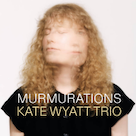
08. Kate Wyatt Trio: Murmurations (Kate Wyatt)
I had the pleasure of seeing Kate Wyatt's trio perform at last August's Markham Jazz Festival and, buoyed by her in-set announcement of its imminent release, excitedly anticipated the arrival of the Montréal-based pianist's Murmurations. Throughout the riveting hour-long live set, she, bassist Adrian Vedady, and drummer Louis-Vincent Hamel showed both how deeply they'd internalized the recently recorded material and the telepathic sensitivity the three have forged since initiating their journey together. Now that the follow-up to Wyatt's 2022 debut album Artifact is here, it's clear Murmurations signifies a pronounced advance in the pianist's career and development.
09. Mark Turner: Reflections on the Autobiography of an Ex Colored Man (Giant Step Arts)
10. Webber/Morris Big Band: Unseparated (Out Of Your Head Records)
11. Patricia Brennan: Of the Near and Far (Pyroclastic Records)
12. Darren Pickering Small Worlds: Three (Rattle Records)
13. Kaisa's Machine: Moving Parts (Greenleaf Music)
14. Colorado Jazz Repertory Orchestra: Golden Lady (Colorado Jazz)
15. Sasha Berliner: Fantôme (Outside In Music)
16. Maria Kaushansky: Northbound to Finch (Flat 6th Records)
17. Iris Bergcrantz: Vi fanns förut (Ladybird)
18. Dabin Ryu: Trio (Endectomorph)
19. Sarah Wilson: Incandescence (Brass Tonic Records)
20.
Rahel Talts: New and Familiar (Rahel Talts)
TOP 20 AMBIENT / ALTERNATIVE
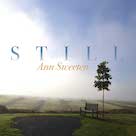
01. Ann Sweeten: Still (Orange Band Records)
Appreciation for the beauty of pianist Sweeten's music is naturally deepened by awareness of the physical struggles she's experienced: already a two-time breast cancer survivor, the Steinway artist received a leukemia diagnosis in 2017. There's nothing self-pitying about Sweeten and her music, however; Still, like the albums before it, looks to the future with hope, exudes gratitude for the life she's had, and favours resilience over surrender. While it's generally classified as New Age, her music transcends categorization when it speaks with unfiltered emotional directness. Still arrives twenty-eight years after her debut album and finds her doing anything but, well, standing still. At seventeen albums (and counting), her healing music continues to enrapture listeners, while Sweeten herself inspires with her outlook and indomitable spirit.
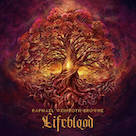
02. Raphael Weinroth-Browne: Lifeblood (Anamnesis Arts)
While the cello might not seem the instrument most naturally suited to the progressive metal genre, its capacity for replicating vocal wail makes it an extremely effective conduit for extreme emotional expression. On Lifeblood, the long-anticipated follow-up to his solo albums Worlds Within (2020) and Worlds Within Live (2021), renowned Ottawa-based cellist Raphael Weinroth-Browne demonstrates how effective the instrument can be when used in a metal context. Augmenting layers of acoustic cello with amplifiers, effects pedals, and bass drum, the music exudes visceral fury. As a cellist who's played for years, his commanding technique allows him to articulate his vision with authority and give voice to the full spectrum of emotion.
03. Deborah Martin & Jill Haley: Rendering Time (Spotted Peccary Music)
Electronic ambient producer Deborah Martin has collaborated with many great artists over her thirty-year career, but an especially fruitful partnership is the one she established with oboist Jill Haley in 2021 for their joint release The Silence of Grace and the sophomore effort that followed two years later, Into the Quiet. The melding of Martin's atmospheric soundscapes and Haley's resonant woodwinds makes for riveting music, and a deep spell is again cast on the culminating chapter in their ambient trilogy, Rendering Time. Inspired by life's cycles of birth, death, and everything in between (and beyond), the recording is sequenced to evoke that arc; it also, of course, can simply be experienced as a collection of ten transporting soundscapes rich in textural detail and timbre.
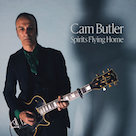
04. Cam Butler: Spirits Flying Home (Cam Butler)
Multiple recordings are available featuring Melbourne guitarist Cam Butler with ensembles of varying sizes—in addition to the eleven solo instrumental albums he's issued, Butler's also contributed to other artists' projects—but there's something undeniably special about one featuring him alone. In that context, his command of the instrument and associated gear is apparent, especially when it's not put to self-indulgent ends but instead used to realize the artistic essence of a piece. It also allows his singular tone to be heard clearly and for the listener to better appreciate the textures he coaxes from his Gibson Les Paul. His artful command of distortion, timbre, and texture is used to consistently powerful effect, the result an intoxicating forty-minute display of guitar wizardry.
05. Cécile Seraud: Psykhé (Cécile Seraud)
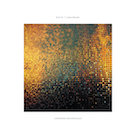
If melancholy permeates Seraud's third album, there's good reason. When the lifelong companion of a close friend of the pianist's died, his widow implored the Brittany-based composer to memorialize him with music, the poignant Psykhé the result. Realizing that her relationship with the couple and their children was vast, Seraud decided to embark on a project that would go beyond a single piece and instead become an album-length tribute. Drawing on stories of their lives and travels together, she crafted a heartfelt memorial that honours the late husband and father. While Psykhé primarily features haunting solo piano instrumentals, songs sung by Erelle Le Bars and Michel Le Faou elevate the project dramatically.
06. Snowpoet: Heartstrings (Edition Records)
The UK label on which Snowpoet appears largely issues contemporary jazz, which makes the London-based quintet something of an anomaly when its sound has more in common with dream pop. Led by the creative one-two punch of singer Lauren Kinsella and keyboardist Chris Hyson, Snowpoet has been entrancing listeners with luminous vocals and lustrous arrangements since the release of its 2014 debut EP. In truth, the album's full and rich sound is the product of five individuals, not two: Kinsella and Hyson are the nucleus, but Matt Robinson (piano, synths), Josh Arcoleo (electric bass, saxophone), and Dave Hamblett (drums) are integral too.
07. KILN: Lemon Borealis (ASIP)
Tellingly, the dozen productions on Lemon Borealis, KILN's first album for A Strangely Isolated Place (ASIP), are credited to their creators, Kevin Hayes, Kirk Marrison, and Clark Rehberg III, as not tracks, songs, or compositions but “soundforms.” Such a choice makes sense when each piece is a meticulously constructed entity that engulfs the listener for three minutes before handing off to the next intoxicating creation. Other band's songs have hooks; for KILN, the entire track is a hook. It's sound design that's critical, in other words, with melody, texture, rhythm, and production equally integral to the result.
08. Itoko Toma: Beside the Moon (Schole Records)
With her latest release an ultra-compact twenty-three minutes, Japanese pianist Itoka Toma would seem to prefer her albums short. In that regard, Beside the Moon is much like her other Schole releases, 2024's Beyond the Mountain and 2017's when the world will mix well, which are likewise modest in duration. But when broaching Toma's music, it's worth remembering that a short poem can be as profound as a longer one and a short story can have as indelible an impact as a novel. Certainly the seven solo piano settings on her latest don't suffer for their brevity, separately or collectively. Each of these haunting songs is emblematic of her beguiling, melody-rich style, and while the arrangements are in many cases reduced to their core, her classical training imbues them with a noticeably refined quality.
09. Rudy Adrian: Along the Coppermine Ridge (Spotted Peccary)
10. Linda Catlin Smith: Volume One: The Plains: Cheryl Duvall, piano (Redshift Records)
11. VA: Sound of the Wetlands (Gruenrekorder)
12. Phil Tomsett: Noise Print / The Acceptance Cycle (Fluid Audio)
13. Wil Bolton: Rusted in the Salt Air (Home Normal)
14. Jon Jenkins: FLOW (Remastered) (Spotted Peccary Music)
15. anthene & Simon McCorry: Wellspring (Home Normal)
16. K. Leimer: Proximate Forms (Palace of Lights)
17. Here: A Quiet Unease (Slowcraft)
18. Ian Hawgood: Savage Modern Structures (Home Normal)
19. Stefan Goldmann: Input (the Sofia Versions) (Macro)
20. Brian House: Everyday Infrasound in an Uncertain World (Gruenrekorder)
THANK YOU
Geof Bradfield, Ernesto Cervini, Eugenia Choe, Aidan Curran, Rebecca Davis, Mike Fazio, Jim Fox, Kira Grunenberg, Antje Hübner, Christina Jensen, Maria Kaushansky, Lydia Liebman, Matt Merewitz, Katlyn Morahan, Paula Mynn, Chelsea Olaniran, Cameron Pearce, Katy Salomon, Geoffrey Silver, Allie Summers, Amanda Sweet, Rahel Talts, Max Tan, Kacie Tzuo, Harald Walkate, and Gail Wein.
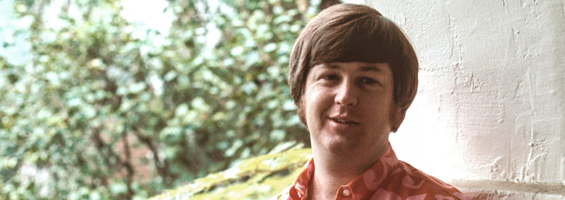
RIP
Dave Allen, Roy Ayers, Andy Bey, Clem Burke, Jimmy Cliff, Steve Cropper, Jack DeJohnette, Roberta Flack, Al Foster, Garth Hudson, Anthony Jackson, David Johansen, Guy Klucevsek, Cleo Laine, John Lodge, Chuck Mangione, Mike Ratledge, Lalo Schifrin, Sly Stone, Brian Wilson, Jesse Colin Young, and many more.
December 2025