

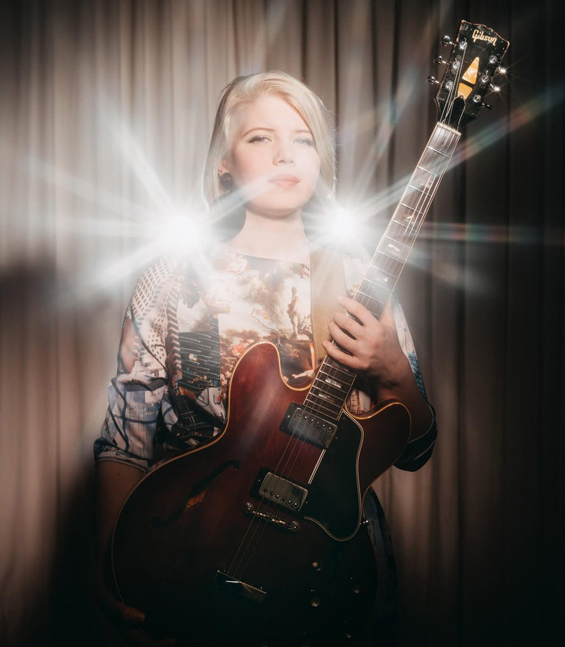
photo: Anne Valeur
SPOTLIGHT 36: ASGEIR ASGEIRSSON / LILJA / ÞÓRDÍS GERÐUR JÓNSDÓTTIR
Spread across five late August days and nights, Reykjavík Jazz 2026 presented over thirty concerts and about 100 artists at various locales around the Icelandic capital. Sets were presented at Harpa's Norðurljós but also Fantasia, Iðnó, Frikirkjan Church, and other places. Attending the festival in full engendered an enhanced appreciation of the country's remarkable talent pool, especially when most of the concerts featured homegrown talent. Testifying to the tight-knittedness of the community, it was common for an artist to not only headline a show but also appear in other artists' ensembles for their sets (showing up repeatedly were bassist Birgir Steinn Theodorsson but especially drummer Magnús Tryggvason Elíassen who, if I'm counting correctly, appeared in no less than eight sets).
Many shows left lasting impressions, including those by pianist Ingi Bjarni, alto saxophonist Sölvi Kolbeinsson, guitarist Andrés Þór, baritone saxophonist Rósa Guðrún Sveinsdóttir, and guitarist Mikael Máni; however, those delivered by guitarist Asgeir Asgeirsson, cellist Þórdís Gerður Jónsdóttir, and guitarist LILJA (Oddrun Lilja Jonsdottir) were so striking, they prompted an invite to appear in textura's thirty-sixth ‘Spotlight.' Much to our delight, all three agreed to share details about their music, their philosophies, and their latest albums, Crossing Borders (Ásgeir), Muna (LILJA), and Hljóð í ljóði (Jonsdottir). textura is delighted to feature these special artists and is deeply grateful to them for being part of the article.
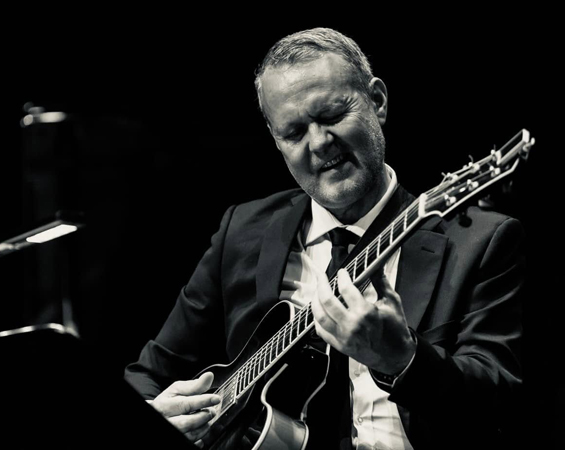
photo: Asgeir Asgeirsson
ASGEIR ASGEIRSSON
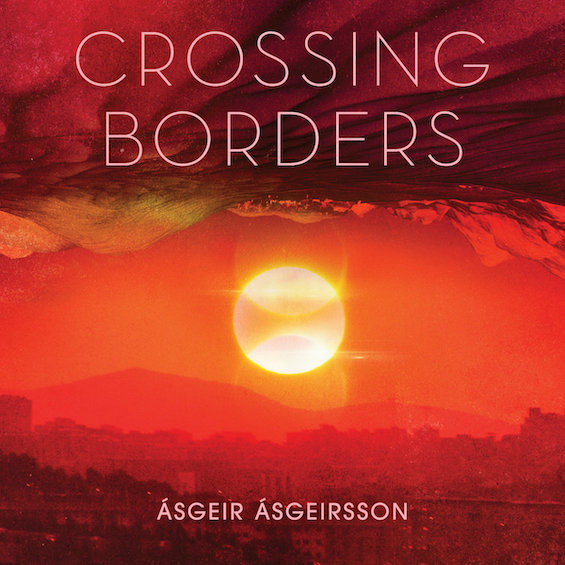
Who: I'm a guitarist and string player who's worked as a professional musician for three decades and am proficient playing in pop, rock, jazz, and world music contexts. I studied jazz guitar at the Conservatorium van Amsterdam and later earned a Master's degree in music education from the Iceland University of the Arts. I've performed on over 100 recordings and have worked with most of Iceland's leading musicians, the Reykjavik Big Band, and Icelandic Symphony Orchestra as well as international artists such as Dave Weckl, Chris Cheek, Seamus Blake, and Ingrid Jensen. As a solo artist, I've released seven albums, the latest, 2025's Crossing Borders, the recipient of the Icelandic Music Award for “Jazz Album of the Year.”
What: In a small community such as Reykjavik, it's necessary to play a diversity of styles. In 2003, five years after returning to Iceland following studies in Amsterdam, I began playing Bulgarian folk music on a tamboura and then travelled to Bulgaria to study a year later. In that same spirit, I've undertaken trips to India, Iran, Egypt, Jordan, Tunisia, Greece, Morocco, and Turkey to learn from some of their leading instrumentalists, among them Nikos Tatasopoulos and Vangelis Trigas (Greek bouzouki), Yurdal Tokcan (Turkish oud), Tareq Jundi (Arabic oud), Hamid Khansari, Yasamin Hosseini, and Sara Rezazadeh (Persian music), and Rajeeb Chakraborty (Indian music).
Those experiences have factored into the string instruments I now play—guitar, bouzouki, banjo, oud, setar, tamboura, sitar—and the recordings I've issued: Two Sides of Europe (2017) was created with leading Turkish players; on Travelling Through Cultures (2018), I collaborated with Greek, Bulgarian, and Indian musicians; and Persian Path (2020) was created with musicians from Iran. All such projects culminated in the creation of Crossing Borders. While I continue to work with pop musicians and Iceland's finest jazz musicians, I've added these beautiful Eastern colours to my vocabulary.
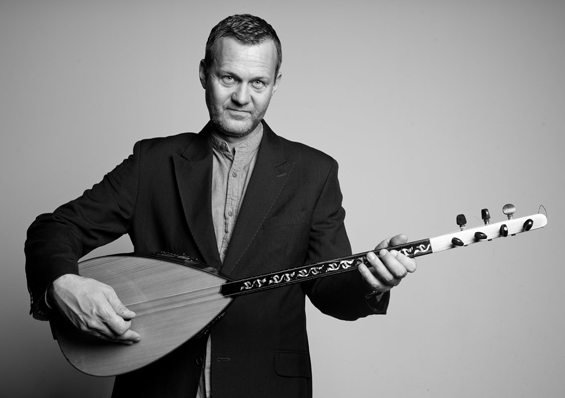
photo: Asgeir Asgeirsson
Currently: My latest release, the award-winning Crossing Borders, is a triple album that took five years to make and is a heady fusion of jazz, pop, and Eastern world music filled with sounds by amazing people I've met on my musical journey.
Musical philosophy: To never stop learning new things and remain humble.
Two favourite artists and/or strongest influences: My two biggest influences are probably Miles Davis and the Turkish oud player composer Yurdal Tokcan.
Three Desert Island Discs: Wes Montgomery: The Incredible Jazz Guitar of Wes Montgomery; Yurdal Tokcan: Bende Can; and Miles Davis: Kind of Blue.
web site: ASGEIR ASGEIRSSON
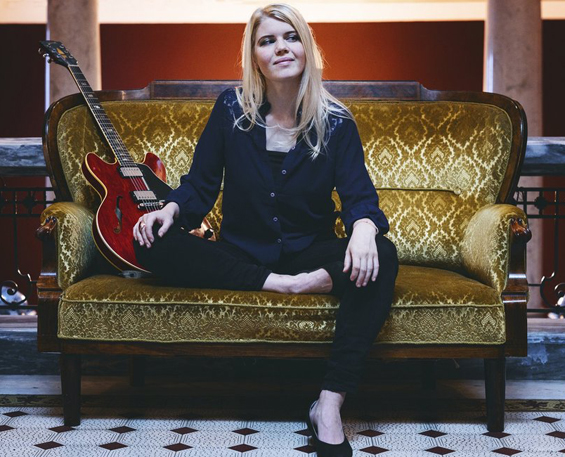
photo: Morten Espeland
LILJA
Who: I'm Oddrun Lilja Jonsdottir, a Norwegian composer and guitarist who performs under the name LILJA. For a number of years, I've been establishing myself on the Oslo jazz scene and bringing together outstanding musicians to present my deeply personal yet universal music. Having performed in most corners of the world and collaborated with musicians in India, Lebanon, Ethiopia, Morocco, Iceland, and New York, I'm accustomed to weaving a wide range of traditions into my music. I'm firmly rooted in modern jazz and improvising communities, but my heart also beats for folk music from different corners of the world.
What: In my early career, I toured as a guitarist with Bugge Wesseltoft, Paal Nilssen-Love, Frode Haltli, and Ingebrigt Håker Flaten. I also went to Ethiopia to play with circus artists, to Morocco to perform with gnawa musicians, to India to play at raga festivals, and visited a Palestinian children's orchestra in Lebanon. After these experiences, I felt compelled to share these impressions with the world as seen from my perspective. This resulted in my debut album, Marble (2020), which features ten songs I wrote and named after cities I visited. The follow-up, Mirage (2023), features collaborations with traditional musicians from Sápmi, Brazil, Morocco, and Pakistan, and was nominated for the Norwegian Grammy Award. I also created an audio-visual piece for the Norweigan Radio Orchestra about artistic censorship and freedom that featured me, Norwegian drummer Paal Nilssen-Love, a visual artist from Belarus, and a poet from Iran, who had been sentenced to 11.5 years in prison and 99 whips for her poetry.
Currently: With my third album Muna, I've turned the focus to my Norwegian and Icelandic roots. “Muna” means “to remember” in Icelandic and “mother” in Elfdalian, a language spoken by around 3000 people in central Sweden (I also learned that it means “egg” in Finnish, which is a funny coincidence). The three last letters of Muna point to “one” in Romance languages, and it is also a Scandinavian name, carried by my sister.
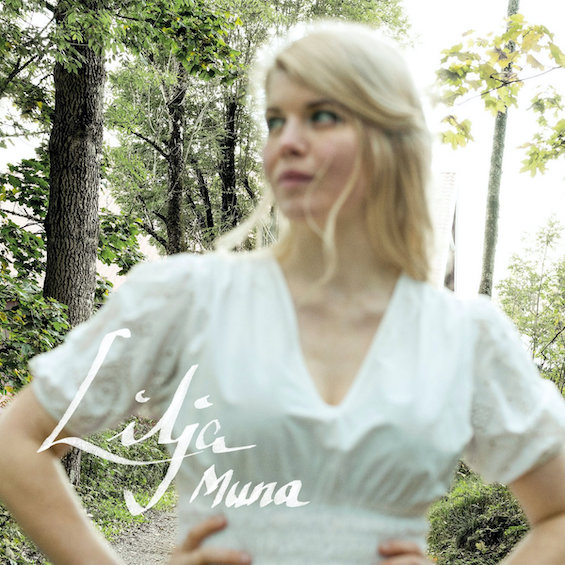
The music on Muna, which features me alongside artists such as Beady Belle, Anders Røine, Bugge Wesseltoft, Helge Norbakken, and Jo Skaansar, was composed as a non-dualistic autobiography—a paradoxical work about life. It's an existential journey through origin, memory, place, love, parenthood, longing, impermanence, and release. The music was originally commissioned for Vossa Jazz festival's fiftieth anniversary, and my ensemble is currently touring to celebrate and promote the release.
Musical philosophy: The core of my artistry has always evolved around connection—connecting with my colleagues on stage, connecting with the audience, and with my inner self.
Making my first two records, I reflected a lot about the concept of home. What is home? Is it a place, or is it a state one can be in, independently of where one is geographically? I hope that my music can feel like home for people, regardless of their age, gender, roots, and cultural capital. I also hope that I can contribute something new to the field—like everyone else, I guess! I also strongly believe that influences from outside are mandatory to create something new.
Two favourite artists and/or strongest influences: Touring as a young artist with Bugge Wesseltoft meant a lot to me. His values of openness, respect, boundary-pushing, and being true to one's artistic voice resonate deeply with me. And of course I've always admired Björk, from listening to her debut album in my youth to visiting her (just-closed) Echolalia exhibition in Reykjavik. She created it after losing her mother, and it's about rituals, transitions, creation, and the mother-daughter relationship. I was very impressed and inspired by how she sublimated her grief into this breathtaking multimedia presentation.
Three Desert Island Discs: For chilling, it would be the Pharoah Sanders/Floating Points/London Symphony Orchestra record Promises; for dancing and joy, perhaps the Moorish Music from Mauritania disc from Dimi Mint Abba and her husband Khalifa Ould Eide; and, finally, either John Coltrane's A Love Supreme or Keith Jarrett's My Song.
web site: LILJA
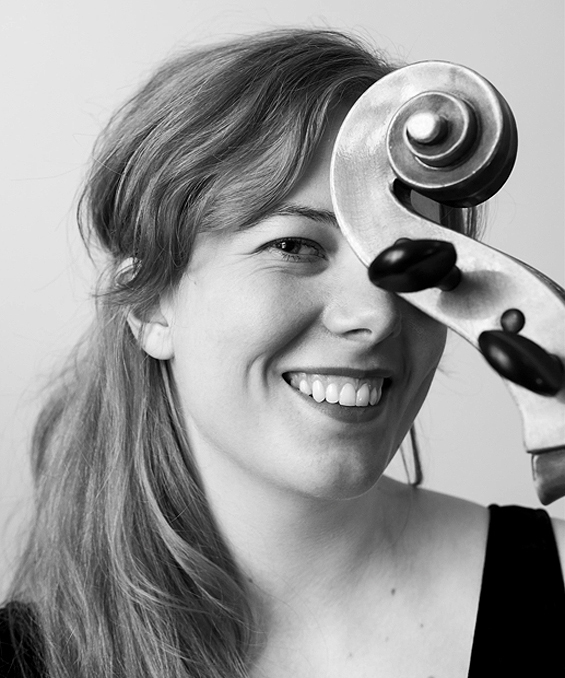
photo: Therese Vadum
ÞÓRDÍS GERÐUR JÓNSDÓTTIR
Who: I'm Þórdís Gerður Jónsdóttir, an Icelandic cellist who plays classical music and jazz and likes to mix the two genres in my playing and compositions.
What: I mostly play classical chamber music or anything that can be considered chamber music, meaning: finding the details and precision of classical music combined with listening and responding to the other performers' playing, preferably at the same time being able to impose my own point-of-view or interpretation onto the music. It's important to me to have respect for the original material from the composer but to also make the music feel as current and alive as possible. The music I love playing at the moment includes chamber music, string quartets, piano trios, and solo cello pieces, and with small ensembles, both jazz and classical.
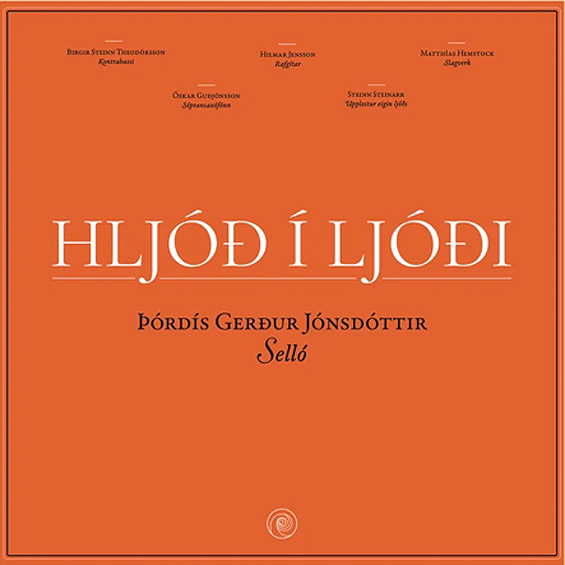
Currently: My new album Hljóð í ljóði (“the sound of poetry”) captures what I've just stated in my attempt to be precise when improvising but also free when playing written music. It also features the cello as a lead instrument in jazz and improvised contexts. The compositions (all by me except one) were inspired by different Icelandic poetry, not as songs to the words of the poems but as translations of their moods from words to music. A great team of players is with me: Hilmar Jensson on guitar, Matthías Hemstock on drums, Óskar Guðjónsson on soprano saxophone, and Birgir Steinn Theodórsson on double bass. I worked with tonmeister Þorgrímur Þorsteinsson and sound engineer Ívar Ragnarsson, and Emma Theodórsdóttir created the album artwork.
Musical philosophy: My main goal in making music is first and foremost to make music with listening as the key. That means playing in response to the impulses the other players make and listening for how they respond to my own musical impulses. This means knowing the music so well that there isn't a need to make too many decisions regarding interpretation in advance and leaving space for each performance to feel alive and spontaneous.
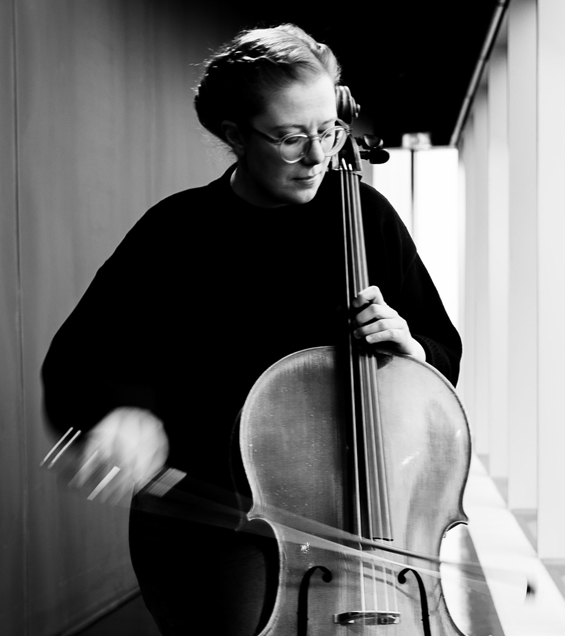
photo: Þórdís Gerður Jónsdóttir
Two favourite artists and/or strongest influences: This is very tricky. My perfect trio would probably be cellist Jaqueline du Pré for her wild energy and virtuosity, gamba player/conductor Jordi Savall for his ensemble-leading and his way of presenting older music with respect but also fresh and personal story-telling, and cellist Erik Friedlander for his incredible approach to the cello as a jazz instrument and his ability to make it sound new and old at the same time.
Three Desert Island Discs: Impossible question but I'll try!: Jordi Savall: Le Concert des Nations: Alcione Suites des Airs à joüer; Punch Brothers: All Ashore; and Joni Mitchell: Blue.
web site: ÞÓRDÍS GERÐUR JÓNSDÓTTIR
October 2026