

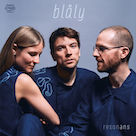
Blåly: Resonans
April
Records
On their sophomore Blåly album, pianist Barbara Fiig, bassist Johan Kjær Houver, and drummer Timon Matern present an identity different from every piano trio I've heard. Even though their music could be categorized as jazz, it largely eschews soloing and improvisation, even if a theme might be subtly elaborated upon by Fiig. It's not pop either, despite the fact that the recording's ten songs feature singable melodies and are no more than three to five minutes at a time. It's also not classical, though the playing exudes the refinement and finesse one associates with it. Collective expression is emphasized over individual virtuosity, which also helps reinforce the focus on group identity.
The three formed Blåly while attending The Royal Danish Academy of Music and discovering a shared interest in material characterized by emotional directness and intimacy. The trio blends Scandinavian folk and Nordic jazz into a fresh melodic hybrid that's immensely appealing. Arrangements are thoughtfully designed to maximize the impact of their instruments and present fresh ways of combining them. Seldom is their music frenetic; instead, the three gravitate to lyrical expressions that soothe through gentle means. The material, all of it credited to the trio but for a cover of the traditional Swedish folk song “Emigrantvisa,” was written while the members were visiting different countries; even so, the ten pieces establish a strong unified impression. Recorded at The Royal Danish Academy of Music in June 2025 and March 2026, Resonans presents mature music rich in melody and poise and refreshingly free of grandstanding.
Often, an inventive drum groove by Matern locks in with Houver's pulsation and Fiig's statements in a manner that's unexpected and ear-catching. Whereas another piano trio might fill every moment with notes, Blåly isn't afraid to let the music breathe and use space for dramatic effect and tension-building. Another thing that separates it from the typical piano trio is its subtle application of production treatments to a snare, cymbal, or piano key (hear, for example, the way the snare's strikes are stretched throughout “Det løser sig”), and in a couple of tracks Houver's bass swells in a manner reminiscent of Sigur Rós's e-bow-inflected sound. Matern downplays jazz grooves for crisp patterns that hint at pop, funk, and even hip-hop influences. Such details do much to help distinguish the recording.
It begins enticingly with “Bølger,” Houver providing an ostinato pulse that Fiig then duplicates before Matern enters with a syncopated groove. A pretty folk theme is ruminated upon but delicately so as not to upset the fragile balance between the instruments. Midway through, the tempo slows for a haunting interlude punctuated by atmospheric piano chords before the groove reinstates itself for Fiig to continue expanding on the song's themes. Wistfulness and nostalgia infuse the piano melodies of “Midt i alting,” Matern's subtly shuffling drum pattern again an inventive partner to the piano and bass parts. Drama increases when Houver's bowed bass swoops across the rising wave of piano and drums. The trio honours “Emigrantvisa” by hewing closely to its resonant folk melodies and accompanying piano with hand percussion and bowing before upping the intensity level with e-bow-like effects.
As restrained as Resonans often is, it's also sometimes hard-hitting, as shown by the soaring heights to which “Ud flugt” and the sparkling, Wales-inspired “Cymru” rise. The album ends strongly when the soulful title track presents one final lyrical and graceful expression. The name Blåly, incidentally, derives from the Danish word ‘ly,' meaning ‘shelter,' and it's hardly a huge leap to say that the music the trio makes does offer a shelter of sorts in its warmth and soothing, introspective character. In being true to their natures, these Danish musicians have cultivated a unique group persona and created an album that's likeable in the extreme and, dare we say, resonant.October 2026