

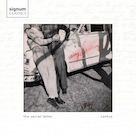
Cantus: The Secret Letter
Signum Classics
Every recording issued by the low-voice ensemble Cantus is distinguished by the luminous vocal blend its eight members produce. The group's sixth album on Signum Classics is rendered all the more powerful, however, by the queer love theme it constellates around and the means by which it's explored. A tapestry brilliantly woven from thoughtfully curated musical selections and spoken-word recitations of passages from letters by Marcus Aurelius, Oscar Wilde, Walt Whitman, Emily Dickinson, and others, The Secret Letter is a recording of immense value and, given the times we're living in, courage. The emotional dimension of the material's heightened, of course, by the fact that the excerpts are from letters that were written privately from one person to another and are thus nakedly emotional, vulnerable, and tender in their expressions of longing and desire. That the feelings shared couldn't be communicated publicly makes their contents all the more affecting.
Cantus has been together for more than three decades, with personnel naturally changing throughout that time. But one thing that's remained solidly in place is the finesse of its vocal delivery: when these eight conductor-less voices merge, the results are glorious. On its latest release, tenors Jacob Christopher, Alexander Nishibun, Paul Rudoi, and Paul Scholtz, baritones Rod Kelly Hines and Jeremy Wong, and basses Samuel Bohlander-Green and Chris Foss show themselves to be cultural historians of a high order in featuring letters that span millennia and musical pieces of broad stylistic range. The incredible breadth of the material brings into sharper relief the fact that queer love has always existed, even when the climate of the times made being “different” a dangerous and perhaps life-threatening proposition. With The Secret Letter, Cantus emboldens those who've been in the shadows to step boldly forth and speak their truth aloud.
Such themes are broached from multiple musical perspectives, whether it be Love Is... by Libby Larsen or “Blackbird” by The Beatles, and addressed head-on in the interludes that are movingly read by different Cantus members. The Secret Letter culminates in two pieces that convey its theme most powerfully, the penultimate setting, “To the One I Once Was (or Might Have Been),” for its inspirational and eloquent words by the group's Hines and the final song a poignant, Foss-arranged rendition of Richard Rodgers' “We Kiss in a Shadow” that comes from The King & I but whose lyrics by Oscar Hammerstein II feel as if they could have been written expressly for this project (“Alone in our secret / Together we sigh /For one smiling day to be free”).
Set to text by Theocritus and marked by the octet's sublime harmonic blend, Abbie Betinis's intricately woven Yhinx attests to the boldness of Cantus's dynamic vision at the outset. Musical variety distinguishes the recording when it includes a rousing African-styled chant (“Canto a Eleggua” by the Afro-Cuban group Sexto Sentido) and swoon-inducing Mexican bolero (“Bésame Mucho” by Mexican songwriter Consuelito Velázquez). The group's classical bona fides are well-accounted for by Poulenc's “Le jour m'étonne et la nuit me fait peur” (Figure humaine) and Janácek's “Loucení” (3 Sbory mužské); its vocal virtuosity is similarly on compelling display in Mohammed Fairouz's “On the Shoulders of Giants” (A Source of Light).
The beauty of the group's vocalizing is captured in lustrous renderings of Steven Sametz's “Not Heat Flames Up and Consumes” (We Two) and Saunder Choi's Light Years to Lebanon. With “Mr. Sandman”-like vocal accents as a backdrop and words by Shakespeare and Mary Sidney, Larsen's setting immediately captivates, even more so when the song segues without pause into a letter by Aurelius and its fervent declarations of love for Marcus Fronto. Revealing too are the words written by Wilde (excerpted from De Profundis), Whitman (to Peter Doyle in 1869), and Dickinson (to Susan Gilbert in 1852). In such cases, the excerpts aren't just read by a group member alone but instead beautifully augmented by wordless vocal backing.
One thing that would have made this exceptional release even better: including in the booklet not only the lyrics to the musical settings but also the passages from the letters (the chills-inducing text for “To the One I Once Was (or Might Have Been)” in particular deserves to be shown). As Hines so astutely notes, they're remarkable in that they're both “meant for a single reader yet capable of outliving both the writer and recipient. Passed between trembling hands, they hold confessions, desires, and love stories told in ink rather than whispers.” Their contents, so stirring in their openness, speak to the enduring power of love, no matter the form it takes, and the “resilience and courage of those who dared to love boldly, despite the risks and obstacles they faced.” All praise to Cantus for channeling their energies into crafting a recording that exudes such a life-affirming spirit.September 2026