

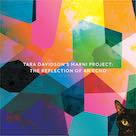
Tara Davidson's Marni Project: The Reflection of an Echo
T.Sound
As a solo artist, co-leader of Carn Davidson 9 (with her trombonist husband William Carn), and contributor to other artists' projects, Toronto-based saxophonist Tara Davidson has been a major part of the Canadian jazz scene for over two decades. But while the dozens of recordings to which she's contributed have always been distinguished by her presence, they haven't granted her talents as formidable a showcase as those she's issued under her own name, and for that reason the arrival of The Reflection of an Echo is especially welcome. Her playing and writing on the release, her fourth as a solo bandleader, are so strong, they invite a renewed appreciation of her exceptional gifts.
To be precise, it's not a solo release full stop but the debut of her new quartet, the Marni Project, in which she's joined by pianist and accordionist Florian Hoefner, acoustic bassist Dan Fortin, and drummer Ethan Ardelli. They're pivotal to the performances on the album, of course, yet in featuring compositions written by Davidson and being dominated by her playing, the album's still very much her show, and it in no way suffers for being so. Splitting her focus between alto and soprano, Davidson reminds us once again of how tremendous a saxophonist she is. It's not as if her efforts haven't been recognized: since 2004 she's received six Juno nominations for 'Jazz Album of the Year' for her work as a solo artist and co-leader; however, in being her first solo release in twelve years, in some ways it feels as if we're hearing her in this light for the first time.
Davidson's no less impressive as a writer, as shown by eight originals of considerable stylistic scope. Drawing for inspiration from a variety of personal experiences, she's imbued each piece with a different mood and character. The quartet's also a very personal project in being named after the couple's beloved family cat Marni, who passed away in 2025 (that's her peeking out at the cover's bottom right); the title of the album's second cut, “17,” was written in March of that year to commemorate Marni's seventeenth birthday, her death coming months later.
Its title taken from Michael Ondaatje's Divisadero, “The Reflection of an Echo” opens the set with a probing, heavily modulated meditation, the leader's silky alto guiding the way and navigating a path through the turbulent storm swelling around it. With accordion and drums shuffling in tandem, Davidson's buoyant soprano memorializes Marni's spirit in “17” with a breezy track brimming with joy and affection, and rousing solos by Hoefner and Fortin are equal selling points for the performance. The relaxed lilt with which “Family Portrait” unfolds lends the piece a bit of a Mexican or South American feel, the music's swoon bolstered by accordion gleam. Delivered at a breathless clip, the tango “Betty's Dance,” on the other hand, exudes a rather zydeco-like character when the accordion huffs and puffs throughout.
Its title referencing Davidson's days traveling from NYC's Grand Central Station to Tarrytown for lessons with saxophonist Dick Oatts, “Train To Tarrytown” honours that experience with a tune in a more traditional mode. Alto-armed, she eases into the tune's boppish swing as smoothly as someone dropping into a warm bath. The power the quartet's capable of getting up to's well-accounted for in the aptly titled “Lift,” which, buoyed by Ardelli's muscular drumming, soars grandly. Inspired by Pablo Neruda's poem “Enigma For the Worried,” “A Different Hour” finds the quartet operating in serene ballad mode. Imagining herself and her husband as Pixar animals, “The Deer and The Raccoon” animates its singing soprano and dancing piano with a pulsating bass-and-drum groove to take the album out on an uplifting high.
As a saxophonist, the leader's a constant wellspring of invention, and while The Reflection of an Echo features many other things besides it features a wealth of soloing by her that's endlessly imaginative and assured. Her partners impress too: Hoefner's a terrific sparring partner, Ardelli enhances each track with creative and responsive playing, and Fortin's a solid grounding presence throughout. Special mention must be made of the dramatically different identity the quartet assumes when Hoefner's playing piano or accordion. Being the less conventional instrument in the jazz quartet format, the three tracks featuring the latter can't help but stand out. That said, the five with him on piano are no less impressive. On this splendid outing, the performances are tight, the writing sharp, and the synergy palpable.November 2026