

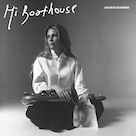
Julieta Eugenio: Mi Boathouse
Dox Records
Mi Boathouse isn't a literal place of refuge for Julieta Eugenio but rather a peaceful inner space the Argentina-born, New York-based tenor saxophonist enters to keep the madness of the world at bay and replenish herself. Many moments on the new album render that state into musical form, the ten-track release less a fiery set and more often an intimate and reflective one. As some of its composition titles indicate, she also drew for inspiration from nature when writing its material, while others evoke the lulling rhythms of water flow and the warm caress of wind on one's face. Eugenio, who's been in New York since 2013, solidly established herself with 2022's Jump and its follow-up Stay two years later.
It's telling that while the new release partners her with bassist Matt Dwonszyk, drummer Jonathan Barber, and the newly added Glenn Zaleski on piano, it's not issued as a formal quartet album but under her name alone. Her collaborators are critical to the performances, of course (Dwonszyk and Barber have been with her for a decade), but the choice implicitly emphasizes that Mi Boathouse is not only her statement, it's also an extremely personal and revealing one. Consistent with that, all but one of the ten pieces are Eugenio originals, the outlier a cover of Otis Rene's “I'm Lost.” The personal dimension's also evident in the inclusion of three pieces featuring her alone that augment her lead with pedals-generated backdrops and that are particularly exposing. Eugenio's got a way with a melody, regardless of whether it's a quartet or solo piece.
Born in 1990, she's young but as a player is seasoned and possesses a confident attack and mature sound. Grandstanding's eschewed as unnecessary when her capabilities are never in doubt. Recorded at Second Take Sound Studios in Manhattan, Mi Boathouse captures her in stellar form as player, composer, and bandleader. It doesn't hurt that the support she receives comes from highly regarded leaders in their own right, with Dwonszyk and Barber fronting Dwonztet and Vision Ahead, respectively, and Zaleski an in-demand player with multiple albums of his own to speak of. Barber's in particular an endless well-spring of invention whose playing rivals the leader's for impact.
Rather than explode from the gate, Eugenio eases the album in on a sultry note with the atmospheric “Tree Breath,” her poised tenor voicing its serene melodies with authority and her bandmates sensitively nurturing the music's elegant flow and colouring it with painterly textures. Like a flowing river, the performance rises and falls, Barber's playing growing ever more dynamic as Dwonszyk and Zaleski provide firm anchors. The music's sultriness extends into the lilting “Brisa,” what with its sing-song melodies, gentle smolder, and abrupt pivots into romantic episodes. “Mantra” finds the quartet waxing soulfully, with Zaleski making the most of his harmonious solo turn. Occasionally the music hints at a Mexican or South American influence, as evidenced by the melodic lilt of “Hurtwave” and buoyant swing of “The Heart's Time.”
Originating out of a walk through Prospect Park and the first of the solo pieces, ”A Talk with the Trees” engages for its coupling of lead saxophone and the enveloping, almost dreamlike backdrop she crafted for it. Emblematic of its title, “The Bee” darts merrily about, the to-and-fro between the soloing lead and see-sawing counterpoint tickling to the ears. The most spell-casting of the trio, however, is “Healing” for its entrancing murmur.
It's interesting that Eugenio positioned “I'm Lost” as the closer when the clear message Mi Boathouse imparts is that she's anything but confused, uncertain, or adrift (placing a track with such a title at the outset would have made more sense in suggesting the gradual overcoming of such a state). The tune itself, however, is a lovely blues-ballad the saxophonist and her sole accompanist, Dwonszyk, distinguish with a heartfelt reading. It's a testament to Eugenio's artistic vision that she crafted her third album not as an exercise in volcanic fury but as an intimate statement that isn't hesitant about embracing a ballad and even at times mellow tone. She's smart in recognizing that are other ways to seduce listeners beyond awing them with ferocity and overwhelming them with volume. Mi Boathouse goes down smoothly in the best sense of the word.November 2026