

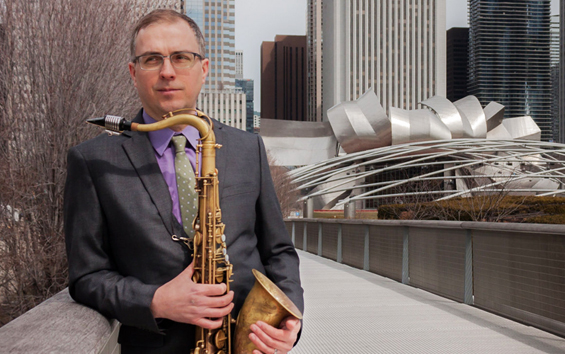
photo: Scott Hesse
FIVE QUESTIONS WITH GEOF BRADFIELD
Founded by saxophonist Geof Bradfield and trumpeter Chad McCullough in 2023, Chicago-based Calligram Records has issued twenty-three releases to date, with two from Bradfield (2024's Colossal Abundance, 2023's Quaver) and two McCullough (2024's in these hills, beyond, 2023's The Charm of Impossibilities); the trumpeter also has a new release in the offing, Transverse, that pairs him with three Macedonian jazz players. Starting up a label's never an easy thing, yet Calligram's ascent has been remarkably strong and rapid. textura caught up with Bradfield to find out why the two felt the need to create the label, how he's planning on following up the terrific Colossal Abundance, and other matters.
1. I'm aware that you and Chad founded Calligram Records in 2023, but I don't know what exactly prompted the move, though obviously you determined there was a need for it. What was the reason, then, for starting up the label?
The most compelling reason was that so many progressive, interesting Chicago jazz artists were looking elsewhere to release their music, whether that was Shifting Paradigm, Origin, Greenleaf, or Outside In, all of which are putting out great music. But there's this great history of Chicago-based indie labels like Vee-Jay, Chess, and Delmark (still going, but more focused on their blues catalog) and there's such a rich scene (or scenes) right now. It seemed important to have a Chicago label for Chicago artists. Chad and I work with a broad cross-section of Chicago artists and know the scene intimately in a way that only someone working here could. We can meet you at Dark Matter coffee to go over a contract or press release, drop the CDs off at your house before a gig, and plug your new record to our friends at WDCB radio. It's just more personal and builds on the community we have here, another aspect that's important to us as individuals and as a business.
2. Did you have a clear idea at the outset of how operational duties would be handled? And what's one thing that's surprised you about running the label now that it's two years old, and were you at all surprised by how quickly it established itself?
We knew from the outset that Chad would handle the art and design and other public-facing items like the Bandcamp page simply because he has that skill set and I emphatically do not! I take care of the press side—mailings and most communication with radio and journalists—and finances. We both bring artists into the label and generally confer on everything we do; it's truly a collaborative effort. If anything has surprised me it's how seamless and mutually supportive that collaboration has been, and also how well-received the somewhat insane idea of starting a jazz record label has been received by our friends in the media as well as fellow artists.
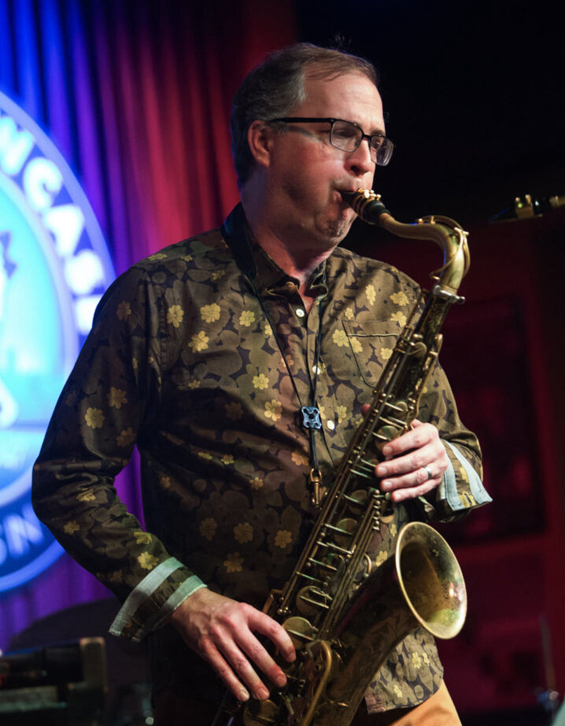
photo: Janet Takayama
3. You were born in Houston and lived in New York and Los Angeles before moving to Chicago in 2004 and are now fully embedded in its jazz scene. Is there in your view a Chicago jazz ‘sound' or identity that separates it from those New York and Los Angeles? And how is Chicago's jazz identity today different (if it is) from what it was in the past?
I do think Chicago has always had a distinct identity, even as there have obviously been many changes in actors on the scene and the sound of the music over the decades. I've had this conversation after hours with many friends for years now, from Mike Reed at Constellation to Michael Allemana on the street in front of the old New Apartment Lounge where Von Freeman held forth, and I'm still not sure I can perfectly characterize those differences, but here's a swing at it.
First, it's a working musician's town (City of Big Shoulders, as Sandburg said). Chicago jazz musicians tend to play lots of gigs in lots of different styles to pay the bills, yet Chicago has produced (and continues to produce) some of the most adventurous and iconic art music out there in not only the jazz world (AACM), but also the chamber music (eight blackbird) and rock idioms (Tortoise). That musical breadth is interesting to me and I think characteristic of many Chicago musicians. One of the greatest examples is Lester Bowie, founder of the Art Ensemble and Fontella Bass's musical director (and husband, of course), but Charles Stepney or (more recently) Jeff Parker are equally revelatory in that respect.
I think one of the other differences between Chicago and the NYC scene is a matter of practicality. It's still possible (just) to make a living in Chicago as a working musician, and while the best musicians here are as good as those anywhere, there are fewer of them than in NYC, which means a greater number of opportunities. I think that this, as well as the legacy handed down by the AACM, Von Freeman, and other role models from the previous generations, makes Chicago musicians especially eager to take risks, to experiment and try out projects that might or might not come to fruition in the long term.
The biggest change in the identity of the Chicago scene is the most inevitable one. The mentors I came up with—Von, Jodie Christian, Willie Pickens, and others—have almost all passed away, and with them that direct connection to a Golden Age of music in Chicago and the jazz in general. It's hard to see that change and I miss them, but the best I can do is to try and pass along some of that legacy to my younger peers and my students.
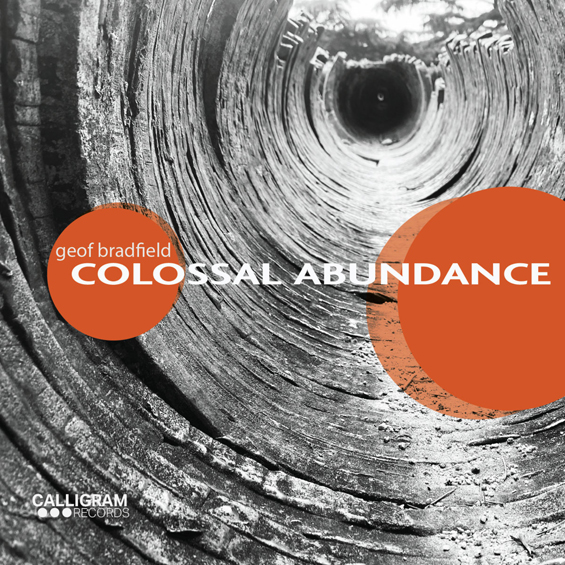
4. You've released a lot of great records over the years, but 2024's Colossal Abundance struck to me as a real high point. What have you got planned as a follow-up and when might we expect to see it appear?
Colossal Abundance was a seminal record for me in terms of the writing, the people involved, and the incorporation of many of my influences, from Henry Threadgill and Wayne Shorter to traditional Shona mbira music. I recently received a New Jazz Works Grant from Chamber Music America to compose new music for a project that builds on these ideas, especially the connection with Shona music and use of the mbira and other African instruments and concepts. The new project, for which I'm continuing to use the Colossal Abundance moniker, will feature myself, trumpeter Russ Johnson, and my old friend guitarist Jeff Parker with a double rhythm section: Dana Hall and Clark Sommers in channel A and Chad Taylor and Joshua Abrams in channel B, so to speak. All these musicians are longtime friends and associates whom I came up in Chicago playing alongside, and I feel like there's a common sensibility there that I want to capture. I'm hoping to roll that out in Fall 2026.
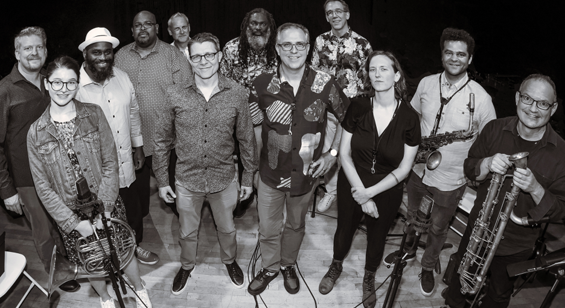
photo: Michael Jackson
5. You lead your own groups but also have a thriving career playing in others' outfits, be it Dana Hall's Black Fire or Matt Ulery's Loom. Do you approach playing differently when you're the leader as opposed to when it's someone else's project?
I feel like it took me a while to figure out how to be a good sideman; that's an art in itself. There's a balance between what you bring personally to the situation and realizing the leader's vision. Early on, I was probably (definitely) less able to step back and submit to the good of the whole when those things came into conflict—what can I say, youth … At the same time, most leaders who hire me do so because they want my musical voice, not just tenor player X, so it's important to find a way to offer that up without getting inside your head about whether someone's going to approve of your choices or direction in the moment. And really, I've been lucky to work with leaders like the ones you mentioned, who, while they have a strong personal vision, also believe in flexibility, spontaneity, and interaction. I try to be that sort of leader as well—clear in terms of direction, but open to input from my fellow musicians. A leader who doesn't know what they want is probably even worse than one who is dictating every move, but as both leader and sideman I prefer the middle path!
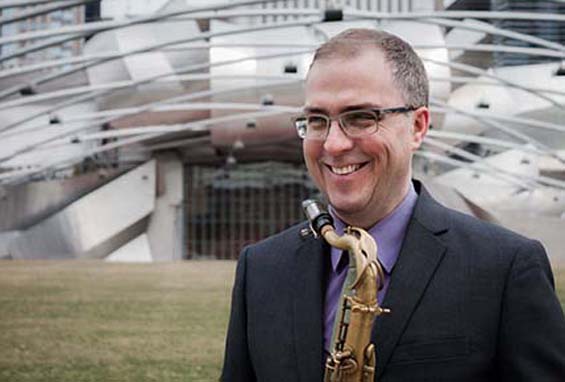
photo: Scott Hesse
Bonus Question: In addition to co-running the label and performing and recording as a leader and sideman, you also hold the title of Professor of Jazz Studies at Northern Illinois University (I'm also presuming you enjoy robust social and family lives). Simply put, how do you fit it all in?
The first thing I'd say is that I'm surrounded by amazingly productive, creative friends and colleagues in all the circles I travel in—my business partner Chad, my wife (art historian and scholar) Amy Mooney, and so many of the musicians I work closely with. Their examples provide inspiration and keep me motivated on the days where I don't feel like doing the work, and of course those days come up for all of us. Also, Amy and I pick up the slack for each other when the other is deep in project mode—we each get the other's creative work, for which I'm deeply grateful.
On a more practical (if bordering on neurotic at times) level: first of all, I clear my email boxes every day with a simple triage system (thank you Terri Hinte!); secondly, I use Pomodoro timers (twenty-five on, five off) to balance out my practice when I have multiple projects going because otherwise, I'll grind out one thing until I get it, wearing myself out in the process; and thirdly, I use Things (app) to track and organize everything from composing to booking to teaching. I hit a point ten or twelve years ago where I had to have some tool to keep from freaking out about possibly forgetting something vitally important—something I couldn't even identify because I had forgotten it; once I've entered the deadline and workflow for a task, I can let it go and focus on what's in front of me. And fourthly and most importantly, I meditate daily. I know this doesn't sound like a time-saver, but it slows everything down and allows me to focus rather than just spinning my wheels mentally as seems to be my natural state.
And for better or worse, I'm not that enamoured of Social Media in any form. It's something I have to actively make myself participate in, so there's not much temptation to doom-scroll, the greatest time-suck of our modern era. I still prefer my analog friends.
web site: GEOF BRADFIELDAugust 2025