

photo: Nate Ryan
TEN QUESTIONS WITH ZACC HARRIS
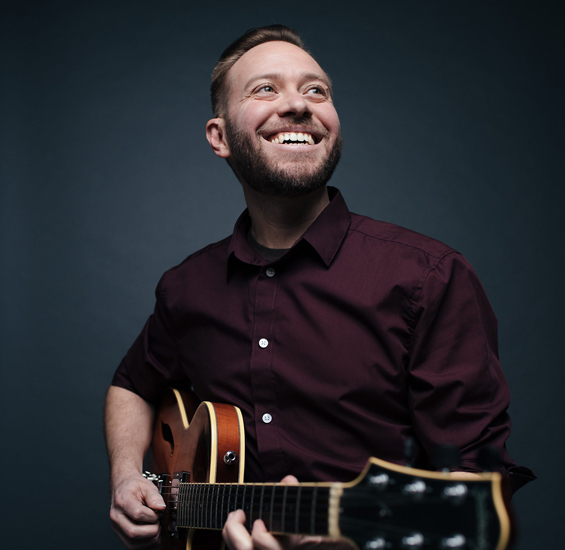
A central figure in the Twin Cities jazz scene for over two decades, Minneapolis-based Zacc Harris no doubt dedicates many an hour to the running of Shifting Paradigm Records, the label he founded in 2012, but that hasn't prevented him from establishing himself as a premiere guitarist and leader of multiple bands, including Atlantis Quartet (which he co-leads) and the Zacc Harris Group. He's also distinguished himself as an educator, with the Southern Illinois University graduate currently on faculty at Carleton College and Hamline University, and as an in-demand sideman. Returning Harris to the spotlight is American Reckoning (reviewed here), his just-released follow-up to 2017's American Reverie and, like its predecessor, a trio date featuring him with bassist Matt Peterson and drummer Lars-Erik Larson. textura had the pleasure of speaking recently with the guitarist about the new album, its timely themes, and a few other matters, and we thank him for generously making time with us to do so.
01. You're based in Minneapolis and have been part of the Twin Cities jazz scene since 2005, but what brought you to that point? Were you born in the area and did you grow up and go to school there, and what made you gravitate towards jazz as opposed to other genres?
I've been based in Minneapolis since 2005, but before that I had a bit of a zigzag path. I was born in Long Beach, California, moved to Charlottesville, Virginia around age ten, and later ended up in Carbondale, Illnois for college at Southern Illinois University after taking a couple of gap years. I actually came to music fairly late. I picked up the guitar at sixteen, and for the first few years it was mostly acoustic guitar … folk songs, Neil Young, Grateful Dead, and that whole world. Honestly, it was jam bands like the Dead and Phish that pulled me toward improvisation and opened the door to jazz. I had heard the classics as a kid, Miles, Trane, Monk, but it didn't really click until I was playing more seriously and became really curious about that language. When I was nineteen or twenty, I put together an original rock band in Carbondale, and almost by accident the musicians I connected with were all in the jazz program and started pushing me toward jazz. I began studying it in school, and that was when it really deepened.
02. Who were formative influences on you as a developing guitarist, and did you have particular experiences that were life-changing?
The first record that completely grabbed me was Wes Montgomery's Full House, Live at Tsubo with the Wyn Kelly Trio and Johnny Griffin. I checked the CD out of the college library and never gave it back because I just had it on repeat day and night for months. I think that CD cost me over $100 in late fees, but was worth every penny! From there I dug into Grant Green, and then Pat Martino was a big obsession for years. And after I moved to the Twin Cities, I started really getting into more contemporary players, folks like Kurt Rosenwinkel, Adam Rogers, Ben Monder. So it was a gradual pull. Improvisation led me in, and then as I immersed myself in these records, it felt like home.
03. American Reckoning is a sequel of sorts to 2017's American Reverie, which, like the new one, filters American folk and rock classics through a jazz trio lens. The title of the new one, however, conveys a darker tonality than the earlier one and hints at a strong political dimension. In using that title and in selecting songs that have to do with struggle, war, liberation, and release, was it your intent to accentuate the critical moment the United States currently finds itself in?
Yes, the new album is very much a sequel to American Reverie. On that record, I was already trying to work through a sense of conflict and nostalgia for an America lost and with the tensions that run through our history as a nation. On this new album, I wanted to use the songs and the album title to hint at a deeper level of conflict, so I'm glad that came across. I think we're in a moment when we have to reckon with the forces that cause real suffering and start imagining something better.
In the case of "Masters of War," that one wasn't recorded with the band in the studio. I recorded it at home, right after the murder of Alex Pretti, just a couple of blocks from where we held our recent album release show, so right in the heart of the city where I live and perform, where my kids go to school. During that whole period, with the surge of ICE activity in Minnesota, that song was just swirling in my head. Dylan's lyrics in that song convey a real sense of anger. Even though we don't have vocals on the record, I hope the feel of the music can still point people toward that message.
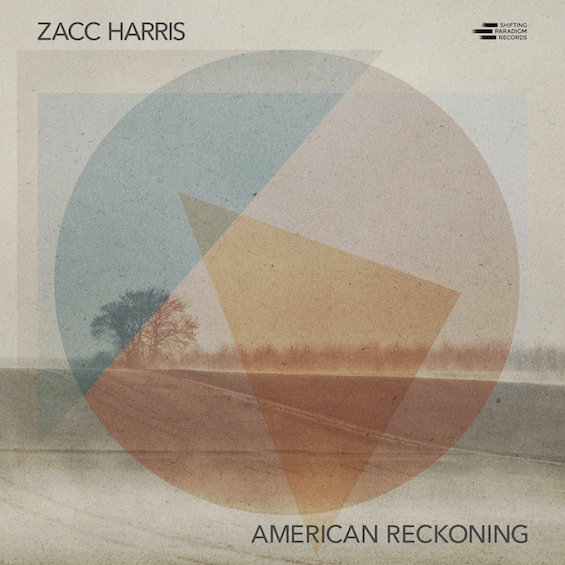
04. The set-list for American Reckoning focuses on rock songs associated with Dylan, The Animals, and The Beach Boys and traditional and folk classics as opposed to, say, jazz standards and American songbook covers. Why did you decide on this particular focus? And how difficult was it to whittle the songs down to nine when I'm guessing you might have started out with a list much longer?
A lot of my gigging life is jazz standards, but my recorded work with Atlantis Quartet and the Zacc Harris Group has mostly been original music, modern jazz, complex forms, dense harmonic ideas, and collective improvisation. The American Reverie project is different in that instead of starting with dense harmonic concepts, it starts with the songs—folk, rock, and roots material that is so familiar, people carry it with them sometimes without even knowing. Improvisation is still there, but it serves the story and character of the original song, or the character that I'm trying to reframe it in.
The seed for the original record was planted on a visit to my mom outside of Charlottesville. She lives very close to Shenandoah National Park, where I spent many afternoons when I was growing up, and looking at the mountains in the park from her porch brought the song "Shenandoah" to mind, and it wouldn't leave me alone. When I got back to Minneapolis, I sketched a quick re-harm, played it that night on what was typically a jazz standards trio gig with Matt Peterson on bass and Lars-Erik Larson subbing on drums, and something really clicked. That moment opened the door, and as we kept performing as a trio, more tunes suggested themselves. So the focus isn't standards or songbook in the usual jazz sense; it's familiar American songs reframed, trying to reveal something new about these pieces that people already know so well.
05. It's interesting to monitor the stylistic approach you adopted for a given song—bluesy for your beautiful take on Stephen Foster's “Hard Times” and dreamily atmospheric for Dylan's “I Shall Be Released.” I also get a kick out of “Darlin' Cory” and the trio's snarling treatment. Were these approaches intellectually determined or did the directions the songs took declare themselves?
It's really a mix of both. Some of the concepts were intentional, while others seemed to emerge naturally as I lived with the songs. During the Covid isolation period of 2020 and '21, I became fascinated with building ambient drones and looping textures in real time while I was making music by myself at home. When the trio started performing together again, I suggested trying that approach on "I Shall Be Released." We played it at a gig, and it immediately felt like the right setting for the tune. The spaciousness of that sound really complemented the emotional weight of the song, and at a time when there seems to be so much information and noise constantly bombarding us, there's something fitting about taking a meditative approach to a song like this.
"Darlin' Cory" came from a very different place. I first got to know it when I was living in southern Illinois and playing a lot of bluegrass and Americana music. I think the first version I heard was Bill Monroe's, but it was John Hartford's rendition, retitled "Dig a Hole" on Steam Powered Aereo-Takes (the outtakes from Aereo-Plain) that really stayed with me. The lyrics are dark, so I wanted to lean into that by building the arrangement around a minor riff with the energy of a power rock trio. That's generally how these arrangements evolve. I usually begin by living with the melody and harmony, then gradually start introducing my own musical ideas. At a certain point, the song almost tells you what it wants to become, and a particular feel or atmosphere naturally reveals itself.
06. In being more nostalgic and uplifting, ”Amazing Grace,” “God Only Knows,” and “You Are My Sunshine” bring a positive, one might say comforting flavour to the recording than something like “Masters of War.” Was this your way of saying there's still cause for hope despite the prevailing mood?
I think there's a real duality running through all of these songs. Even the pieces that feel hopeful contain an undercurrent of sadness, and the darker songs often contain moments of beauty or grace. I wanted the arrangements to reflect that complexity rather than present the material in a single emotional register. With "Amazing Grace," I intentionally darkened some of the harmony and even altered a note or two of the melody to bring out the hymn's more somber character. At the same time, I wanted to contrast that with a more uplifting rhythmic feel, creating a tension between the two emotional worlds.
"You Are My Sunshine" is another good example. Most people think of it as a cheerful song, but if you really listen to the lyrics, especially the verses, it's incredibly heartbreaking. We leaned into a New Orleans second-line groove to give it energy while still allowing that melancholy to come through beneath the surface. From a sequencing standpoint, I also wanted the record to have some emotional contrast. There are several pieces that are more reflective or pastoral, so it felt important to balance those with arrangements that bring a different kind of momentum and light.
"God Only Knows" is probably the least transformed piece on the album. Brian Wilson had already done the hard work, and it's one of the greatest pop songs ever written. Our goal wasn't to reinvent it so much as to inhabit it and let the strength of the composition speak for itself.
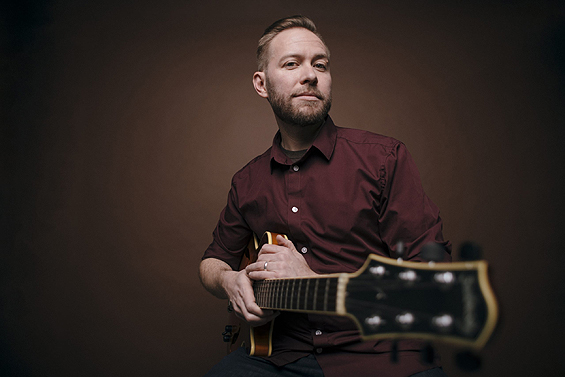
photo: Nate Ryan
07. I'm particularly impressed by the careful balance you strike between hewing to a song's melody and structure and freely elaborating upon it. Is that balance something you're conscious of while playing or does it simply come naturally? Or is it simply that when playing something iconic like “God Only Knows,” the best strategy is to simply stick to the song and not get in the way of its magic?
As an improvising musician, one of the things I've worked on over the years is being able to keep the melody present in my mind, even while I'm playing something entirely different. Sometimes the improvisation grows directly out of the melody with small variations, and other times it heads somewhere completely unexpected. But because I'm always hearing the original song internally, there's an invisible thread connecting the improvisation back to it. I think that's part of what creates the balance you're describing. I'm not consciously thinking, "Now I'll stay close," or, "Now I'll stretch out." It's more that the melody acts as a kind of gravitational centre, so even when the improvisation wanders, it still feels connected to the song. And yes, with a song like "God Only Knows," restraint is part of the arrangement. You don't have to do very much to reveal its magic. Brian Wilson's writing is so complete and so emotionally rich that the best thing you can do is trust the song and avoid getting in its way.
08. Without naming names, I can think of at least a handful of contemporary guitarists whose sound is instantly identifiable. There's a downside, however, to that, which is that the style can become too handcuffing and difficult to break away from. To my ears, your guitar playing is less easy to pigeonhole—in a good way. How would you describe your style as a guitarist?
That's an interesting observation, and honestly, it's nice to hear. When I was younger, I was completely obsessed with Pat Martino. I transcribed a dozen or more of his solos, learned many of his tunes, and spent years trying to absorb every aspect of his playing. Shortly after I moved to Minneapolis, I was rehearsing with a group in a building where different bands rented practice spaces. We finished a tune, heard a knock on the door, and it was Pete Hennig, who's now been my bandmate in Atlantis Quartet for twenty years. His rehearsal room was down the hall, and he wanted to introduce himself, and he said, "You guys sound great. Which one of you sounds like Pat Martino?"
At that moment, I felt two things at once. Part of me was thrilled because I'd achieved exactly what I'd been trying to do, sounding like Pat Martino in some way! But another part of me realized that if people were hearing Pat instead of hearing me, it was time to move on and start developing my own voice. Martino is a perfect example of a musician with a completely singular sound, and I still admire that enormously. But over the years, as my musical interests have broadened, I've also come to appreciate the value of adaptability. I love jazz, but I'm also drawn to psychedelic music, Americana, folk traditions, ambient music, and experimental sounds. Rather than imposing one recognizable guitar voice on all of those styles, I try to let each musical setting bring out a different aspect of my playing.
If there's a thread that ties it all together, I hope it's not a particular guitar sound or vocabulary so much as a consistent musical sensibility … an emphasis on melody, listening, and serving the character of the music itself. I think that's a more meaningful kind of identity than simply being recognizable after the first few notes.
09. You founded Shifting Paradigm, which operates out of Minneapolis, with drummer JT Bates and pianist Bryan Nichols about fifteen years ago. Did the three of you create the label to document the city's scene because you felt it hadn't been adequately accounted for, and how has that scene changed (if it has) from then to now?
Shifting Paradigm Records (SPR) grew out of a conversation in 2011 when pianist Jeremy Walker gathered about a dozen Twin Cities jazz musicians and posed a simple question: "How can we elevate our scene?" As you might expect, with that many creative people in one room, there was no shortage of ideas but also not much consensus. I suggested starting a record label. Most people were not interested in that idea aside from JT Bates and Bryan Nichols who immediately saw the potential. Their encouragement was incredibly important because it gave me the confidence to move forward. One point of clarification, though, is that while JT and Bryan were instrumental in supporting the idea, and they've remained close friends and trusted sounding boards, I actually founded and ran SPR myself during those early years. As the label grew, I gradually brought in a few additional people to help with promotion and day-to-day operations.
The motivation was exactly what you suggest. It felt like the depth and quality of the Twin Cities jazz community wasn't being adequately documented or presented to a wider audience. There were extraordinary artists here but relatively few opportunities for their work to reach listeners beyond the region. Looking back years later, one of the things I'm most proud of is that SPR has helped change that, even in a modest way. We've been able to document an important chapter of this scene, and other scenes, particularly in the Midwest, while helping a number of artists build regional and national recognition. That's been one of the most rewarding aspects of the whole project.
10. Even when labels (yours included) have artists are on their rosters who are located outside the immediate area, they still have a clear identity—ECM and Blue Note come to mind. Is there a particular identity Shifting Paradigm has created and if so how would you characterize it?
I think every good label develops an identity that goes beyond genre. ECM, Blue Note, and others certainly have recognizable aesthetics, but what really unites their catalogs is a shared artistic philosophy rather than a single sound. That's always been my aspiration for Shifting Paradigm. I don't think there's one "SPR sound." The artists on the label span a wide range of approaches, from modern jazz to straight-ahead, contemporary improvised music to folk-influenced projects like American Reckoning, chamber jazz and works that draw from rock, electronic, and global traditions. What connects them is a commitment to artistic integrity and to musicians who are trying to say something personal rather than simply working within an established style.
Another common thread is that many of the artists have deep roots in creative music communities that don't always receive national attention. While the label began as a way to better document and elevate the incredible music being made in the Twin Cities, it has naturally grown to include artists from other places who share that same spirit of curiosity and originality, especially in the Midwest. I've always thought of SPR as both a champion of regional jazz and a curator of music that values creativity, individuality, and a willingness to take risks. If listeners come to trust that a Shifting Paradigm release will introduce them to an authentic artistic voice, even if each record sounds completely different from the last, then I think we've succeeded in creating an identity.
website: ZACC HARRISJuly 2026