

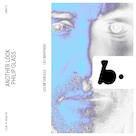
Les Métaboles: Singing Ravel
b•records
2025's Another Look, centred upon Philip Glass's Another Look at Harmony – Part IV (1975), set an extremely high bar for Les Métaboles to match on its follow-up, but the French a cappella group's Singing Ravel proves to be as satisfying. In an inspired move, the company's conductor and Musical Director Léo Warynski built on the sole material Ravel created for a cappella choir, Trois Chansons, by commissioning four contemporary composers, Clytus Gottwald, Thierry Machuel, Gérard Pesson, and Thibault Perrine, to create vocal arrangements of some of the composer's non-choral scores. Founded in 2010, Les Métaboles meets the many challenges of the project handsomely, not an easy thing to do when the arrangements require the SATB choir to alternate between soloist and ensemble roles and when Ravel's material is often extremely complex harmonically.
Recorded live at the Philharmonie de Paris, Singing Ravel provides a sumptuous listening experience in its ravishing treatments of Pavane pour une infante défunte,Trois Chansons, Boléro, selections from Ma Mère l'Oye, L'enfant et les sortilèges, and Shéhérazade, and others. As that list shows, the recording also offers a thorough overview of the composer's music. Les Métaboles was born, it seems, for this project when the combination of the singers' natural French connection to the music and the composer's command of rhapsodic melody and textural finesse is so magical. The transitions from orchestral and piano scores to a cappella arrangements are realized seamlessly and illuminate the original pieces in new ways.
Three Perrine transcriptions appear, his version of Pavane pour une infante défunte a mesmerizing scene-setter. The ensemble's pristine vocal harmonies amplify the allure of the music, as does the vocal arrangement in its fluid coupling of foreground and background parts. Clearly evident too at this early juncture is how brilliantly the composer's material lends itself to an all-vocal presentation. Perpetuating the beauty of the opener are two Machuel transcriptions from Ma Mère l'Oye, the stirring “Pavane de la belle au bois dormant” and “Le jardin feerique,” each retaining its poetic sublimity in its new incarnation and the blossoming of voices in the latter particularly rapturous (listen for the transcendent soprano moment that precedes the glorious climax).
From Trois poèmes de Mallarmé comes “Soupir,” with Gottwald refashioning the original into a commanding performance marked by extended tones and stacked harmonies. He extends his audacious touch to luminous treatments of “La Vallée des cloches” and the aria “Toi, le cœur de la rose,” from the piano suite Mirrors and ballet L'enfant et les sortilèges, respectively; the baton passes to Perrine when his transcription of the latter's haunting “Adieu, pastourelles!” appears shortly thereafter. At the album's centre is Trois Chansons, whose parts are attacked with fervour by the singers. After “Nicolette” introduces the work authoritatively, “Trois Beaux Oiseaux du paradis” works its poetic charm by accentuating contrasts between male and female vocal timbres. “Ronde,” on the other hand, flashes by at light speed and puts the vocal agility of the ensemble to the test. Pesson transcriptions of Shéhérazade settings appear also, with “La Flûte enchantée”and “L'Indifférent” both presented resplendently by Les Métaboles.
Its performance of Boléro is a tour de force that never falters or loses momentum for the full measure of its fifteen minutes. It's especially fascinating to witness how the instrumental score is replicated by Perrine in vocal form (particularly the way individual singers mimic the soloing horns and woodwinds in the original), with onomatopoeia and body percussion utilized to effect the transition. The slow, incremental build is guided masterfully by Warynski and executed fastidiously by the singers. As revealed in an interview included with the release, he argued in favour of a version whose length would match the orchestral original so that tension would be maximized, reasoning that “Boléro need(s) its full length because it works by saturation; it's only when you think you can't stand the theme any more that the modulation comes in.” Consistent with that, the audience applause that follows the performance is as much explosive release as appreciative response.
Recordings of Ravel's solo piano and orchestral music are abundant, but considerably rarer is one featuring a cappella treatments, which makes Singing Ravel all the more valuable. That its pieces are performed so magnificently by Les Métaboles makes this release an even greater event.May 2026