

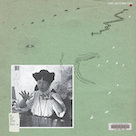
Weston Olencki & TAK Ensemble: when the great fires were lit on the other side of the ocean
Sweet Wreath / TAK Editions
Something witchy this way comes, namely the first collaborative album between Berlin-based composer Weston Olencki and the NYC-based TAK Ensemble. Where to begin? The vinyl cover includes a centuries-old photo of a spiritualist levitating a pair of scissors, the back cover lists the release as having been jointly issued on Sweet Wreath and TAK Editions in 2026 and the reissued edition (this one, therefore) on FFRC editions in 2076 (restored, we're told, from digital negative backup in September 2074), and stickers on the vinyl sleeve identify it as an item from the University of Buffalo Library archives. They're but three mystifying details of a project that traffics delightedly in weirdness.
With a title deriving from the psycho-geographical journeyings of W. G. Sebald, when the great fires were lit on the other side of the ocean (2022-24) is a plunge into the real, imagined, and mystery-laden histories of electricity, a subject tailor-made for the kindred sensibilities of Olencki and TAK Ensemble. Words The Wire used to describe the group's sound, that it combines "crystalline clarity with the disorienting turbulence of a sonic vortex,” as easily apply to the psychic destabilization induced by its latest effort.
Formed in 2013, TAK Ensemble has remained resolutely true to itself on nine albums, with collaborations preceding the current one with composers such as Tyshawn Sorey, Ashkan Behzadi, Natacha Diels, and Taylor Brook. The latest set features Laura Cocks (flutes), Madison Greenstone (clarinets), Marina Kifferstein (violin), Ellery Trafford (percussion), and Charlotte Mundy (voice, amplifier, objects), with Dylan Kerr (additional choir voices) also involved. No surprise, the outfit augments its standard instrumentation with unconventional objects, in this case cables, ‘Tesla coil' plasma speakers, solenoid motors, sizzle chains, salvaged heat sinks, crystal glasses, and more. Field and electromagnetic recordings sourced from Niagara Falls (at Nikola Tesla's first AC power plant) and Buffalo, Lily Dale, and New York City, respectively, also seep into the mix.
Structurally, the work advances through five parts, side A given to the mesmeric slow-burn of “silver chain recitations” and B progressing through contrasting sections, the most brain-addling “An Crithir” in delivering a “speculative contrafactum of old Irish sean-nós balladry.” Ghostly intoning, electromagnetic crackles and drones, and spookiness in spades permeates a fantastical travelogue that curdles, creeps, and groans for twenty minutes. The past always holds unsolvable mysteries, and consistent with that when the great fires were lit on the other side of the ocean presents it as a field of almost supernatural ineffability.
With text constellating around fragments from Sebald's Rings of Saturn, “silver chain recitations” enters on a woozy melange of blurry electrical drones, bass clarinet croaks, and violin creaks, with an occasional vibraphone accent surfacing until a slow-as-molasses Mundy materializes to deepen the hauntological effect. Eventually she's overwhelmed by a thick mass of crackle, thrum, flute, and clarinet that swells during the track's closing minutes. “seven kilometers upriver from Suspension Bridge” initiates the second side with field recordings of bird calls and water burble before instruments slowly creep in. Mundy then navigates the challenging rise-and-fall of “An Crithir,” her voice backed by a humming drone and Kerr's choir. Brace yourself for the nightmarish turn the music takes two minutes into the track and in the subsequent “War of the Currents and the Thundering of Niagara,” where her vocal's almost buried under a caterwaul of churning waves. Dialing down the intensity, "the aviary” eases the listener out with a soundscape of clinking noises and other phantom perturbances.
Multiple formats of the thirty-seven-minute work have been made available, including increasingly elaborate vinyl editions that supplement a lyric sheet insert with a footnoted article on the work's source material and a copy of the composer's handwritten score. Olencki and TAK's collaboration won't be dislodging this week's latest flavour-of-the-week pop star from the top of the charts anytime soon, of course, but underground projects like theirs testify to the ever-fertile soil out of which such outsider works have pushed their way to the surface for decades. Long may that continue.November 2026