

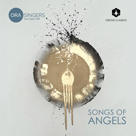
ORA Singers: Songs of Angels
Orchid Classics
Under the guiding hands of Artistic Director-and-conductor Suzi Digby and Artistic Advisor David Clegg, the UK-based vocal ensemble ORA Singers celebrates Orlando Gibbons with a release of choral performances marking the 400th anniversary of his death. As Digby, who founded the ensemble in 2016, notes, some of his anthems are familiar (e.g., “O Clap Your Hands”), but the album-length presentation encourages a much deeper appreciation of his work. Songs of Angels generously supplements all ten of his complete surviving full anthems with others that are less known yet deserving of attention.
Two other things make the release special: the inclusion of arrangements by British pianist Harry Baker and four newly commissioned pieces by Marco Galvani, Nicola LeFanu, Cecilia McDowall, and Will Todd that draw for inspiration from Gibbons originals. Comfortable in multiple milieus, Baker's played with jazz artists such as Jamie Cullum and Misha Mullov-Abbado and as a classical pianist worked with soprano Fatma Said and cellist Sheku Kanneh-Mason, among others. A more comprehensive portrait of Gibbons and more inspired reimagining of his music would be hard to find.
After establishing himself with the 1612-published First Set of Madrigals and Motets, the Oxford-born and Cambridge-raised Gibbons (1583-1625) accomplished much as a composer, musician, and organist (in 1623, for example, he was appointed organist of Westminster Abbey) before dying suddenly of a stroke in Canterbury. A decade later, Charles I ensured Gibbons' name would endure by ordering manuscript copies of his works to be made, his music a fixture of English cathedral repertoire ever since.
The collection begins with Baker's re-imagining of “The First Song of Moses,” the first in a series of songs newly arranged by the pianist. With him brightly complementing the glorious intonations of the choir and soprano Lucy Cox, “The Song of Moses” provides a splendid entry-point. The smooth, silky textures of the singers and harmonious tone also make the song a resplendent scene-setter for the album (Cox's presence similarly elevates the James Weeks-arranged “Who's this, that leaning on her friend” and “Arise thou North-winde from the North”). Whereas Baker's re-imagining of “The Song of Angels” is stirring, even if it is just over a minute in length, “The Lamentation of David over Saul and Jonathan” is affecting in its sorrow and distinguished by moving, piano-accompanied solo expressions.
The four newly commissioned pieces are sequenced effectively in that each follows the Gibbons original that inspired it and thus invites immediate reflection upon each pairing. We begin with the rapturous “Hosanna to the Son of David,” all staggered exclamations of joy and ecstasy, in its original form before turning to a setting of the same text by Galvani that's as richly contrapuntal as the other but newly adventurous in its incorporation of antiphonal writing and a duet episode involving soprano Isabella Gibber and mezzo soprano Martha McLorinan. Speaking of joy, the spirited “O clap your hands” is as infectious and rousing as one would expect, while McDowall's elaborate treatment of same amplifies its celebratory tone with rhythmic agility and in its declamatory gestures a subtle gospel-tinged flavour. The vocal dexterity of the ensemble is amply demonstrated in the six-voice rendition of “O Lord, in thy wrath rebuke me not,” which LeFanu departs from in her stark “Be still, my soul” makeover by infusing it with tremulous unrest and darker tonalities. Todd gets the album's last word in following Gibbons' uplifting hymn “Veni Creator Spiritus” with a reverential re-imagining tailor-made for contemplation. The four reflections honour Gibbons whilst also bringing something fresh, personal, and new to them. In doing so, the composers uphold the English choral tradition but advance upon it too.
In those cases where the choir performs without accompaniment, the eloquence and purity of its sound is vividly captured (see “Almighty and Everlasting God,” “Deliver us, O Lord,” and “I am the resurrection”). While introspective settings (“O Lord, in thee is all my trust”) and an occasional lament (“O Lord, how do my woes increase,” “O Lord, I lift my heart to thee”) do appear, the tone of the music is generally celebratory and life-affirming (“Lift up your heads”). Digby and the twenty-member ORA Singers lift Gibbons' music to soaring new heights on this generous seventy-six-minute collection (twenty-three tracks in total), and the music's no less glorious when the four commissioned tapestries are folded in. Anyone seeking an illuminating and comprehensive account of Gibbons' expressive music would be hard pressed to find a better one than Songs of Angels.July 2026