

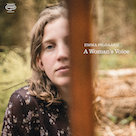
Emma Pilgaard: A Woman's Voice
April Records
A mature third-album statement from Danish singer-songwriter Emma Pilgaard, A Woman's Voice honours eight figures who've had a pivotal impact on the country's history. To create this empowering song cycle, Pilgaard drew for inspiration from Danish author Gry Jexen's Kvinde kend din historie (Woman Know Your History) and recruited a small coterie of leading female jazz musicians to animate its songs. Augmenting her attractive voice is the core trio of Estonian pianist Rahel Talts, Swedish double bassist Hilda Nordkvist, and Polish drummer Patrycja Wybranczyk, with Danish vibraphonist Viktoria Søndergaard and trumpeter Ida Brinch making memorable guest contributions.
As a mother and artist trying to balance a musical career and family life, Pilgaard relates easily to the challenges faced by the figures featured on the album, and their stories will no doubt also resonate with women whose lives resemble Pilgaard's. She openly acknowledges that the resilience, courage, and determination they showed has made it easier for women like her to live they way they do. It's telling also that these pioneers came from multiple walks of life, one an electronic artist, others a sculptor, painter, geophysicist, and stunt artist, with each in her own way dramatically expanding on the options available to women today.
Let's not forget that while there is pain and struggle in their stories, there's achievement and triumph too. Pilgaard's liner notes illuminate the songs in providing concise snapshots and supplementing them with revealing details about the musical approach she adopted for each portrait. One comes away sharing her admiration for the perseverance the women showed in overcoming a myriad of obstacles—even when the outcome was tragic, as in the case of the silent film stunt performer Emilie Sannom, who died in a parachute jump in 1931.
Pilgaard's lustrous voice is a key selling-point, her instrument a supple thing well-suited to intimate jazz balladry. With others handling the instrumental side, she's able to concentrate fully on her delivery, and the artfulness displayed suggests it was a wise choice. It's a thoughtfully crafted recording too in the way instrumental touches complement the content. In “Hidden Melodies,” Pilgaard uses vibraphone to reference the sine tones of electronic music pioneer Else Marie Pade, while the minute-long intro to “Mistress of the Air” features an explorative improv of drums and vibes to evoke the aerial movements of Sannom.
The sophistication of Pilgaard's writing and the luminosity of her voice are on stirring display during her homage to Skagen-born painter Anna Ancher, “Glowing in the Light of a Sunbeam.” With brushed drums, resonant double bass, and elegant jazz piano as accompaniment, the song initiates the album on a high. The production complements Pilgaard in placing her voice at the forefront and with maximum clarity, and consequently no lyric sheet's needed when the words are easy to make out. With trumpet and vibes adding to its shimmer, “Hidden Melodies” makes for an affecting homage to Pade. Darker in tone is “Through the Gloom,” which, told from the perspective of the child taken from her, addresses the tragic case of Carla Hansine Petersen, a victim later in life of Denmark's twentieth-century eugenics policies. A much happier story's recounted in the soaring “Above Expectations” with its celebration of the accomplishments of Danish baker, pastry cook, and business entrepreneur Karen Volf.
On a rather more aggressive tip is “My Mother,” a forceful account of the challenges addressed by women's rights campaigner Thit Jensen. While the song's not unmemorable, the lyrical jazz style adopted for the tributes to geophysicist Inge Lehmann, “A Woman's Voice,” and sculptor Anne Marie Carl-Nielsen (the wife of Danish composer Carl Nielsen), “We Can Be Lonely,” seem better suited to Pilgaard's voice and talents. That said, a large number of songs do gravitate in that stylistic direction, resulting in an album that could have had more variety.
Of course no one will mistake her music for Joni Mitchell's, yet there are parallels. Pilgaard's fusion of pop songwriting and jazz isn't entirely separate from Mitchell's own forays on Court and Spark and to a lesser degree The Hissing of Summer Lawns. And while their voices are hardly similar, both fit comfortably into that milieu. Pilgaard's material is greatly enhanced by the playing of her partners, Talts a terrific pianist (whose own splendid releases textura's reviewed) and Nordkvist and Wybranczyk sensitive players too. Though they're not on every piece, Brinch and Søndergaard elevate the recording when they do appear, with the trumpeter, for instance, contributing strong solos to “Hidden Melodies” and “A Woman's Voice,” the latter also memorable for coupling scat singing with muted horn.November 2026