

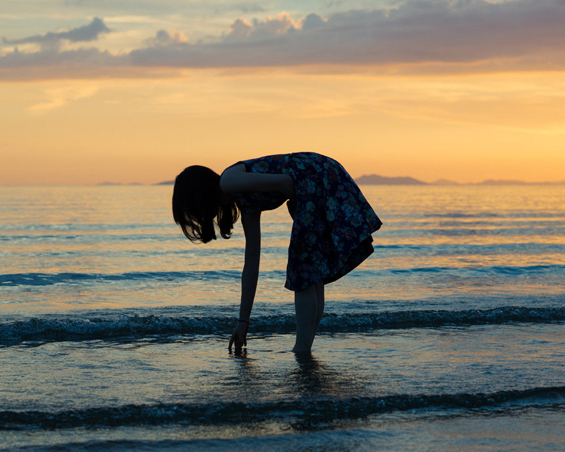
photo: Shin Kikuchi
2025 ARTIST PICKS
Every December textura asks artists whose releases were selected for that year's roundup (here) to highlight a work, musical, literary, or otherwise, that helped sustain them during the year. Herewith are their picks for your reading pleasure and edification. textura is immensely grateful to those who at this busy time of year made time to contribute to the article and sincerely thanks them for their generosity.
Iris Bergcrantz • Wil Bolton • Cam Butler • Laurie Christman • Colorado Jazz Repertory Orchestra • Sarah Moulton Faux • Stephen Horne • Maria Kaushansky • Yosef Gutman Levitt • Will Liverman • Deborah Martin • NYFOS • The New York Second • Timothy Rumsey • Lauren Scott • Krešimir Stražanac • Rahel Talts • Itoko Toma • Phil Tomsett • Raphael Weinroth-Browne • Sarah Wilson • Kate Wyatt
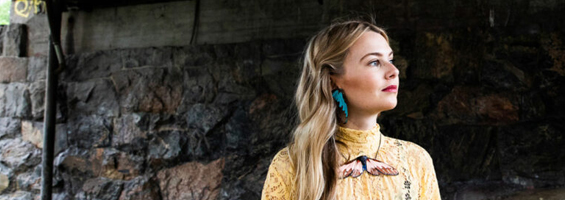
Iris Bergcrantz (#17: Jazz: Vi fanns förut, Ladybird)
One of my favourite works of 2025 is a movie called Sentimental Value by director Joachim Trier. The film is an incredibly beautiful and symbolic portrait set in a stunning turn-of-the-century house in Oslo. It portrays family dynamics over generations in a deeply honest and believable way. The acting is phenomenal, especially by Renate Reinsve, who plays the daughter of a famous film director. She has a remarkable ability to embody a sensitive soul who has learned to suppress her emotions and has formed unhealthy attachment patterns to those around her. The film shows that it is not always the one who cries the loudest who is most in need of help; often, it is the one who does not cry at all.
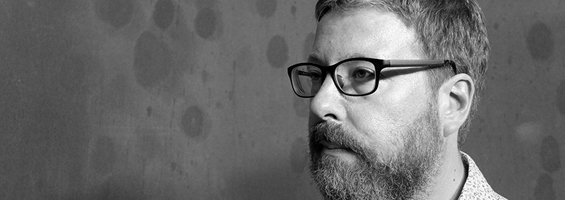
Wil Bolton (#13: Ambient / Alternative: Rusted in the Salt Air, Home Normal)
I spent half of the year in South Korea, participating in artist residencies and creating works for a few exhibitions there, so spent less time than usual discovering new music. Much of my occasional downtime was spent in cafes listening to jazz hop on vintage JBL speakers while sipping iced coffee! My favourite creative experience was therefore not musical, but visual art: Adrián Villar Rojas' The Language of the Enemy at Art Sonje in Seoul is a huge installation that takes over the entire gallery, transforming its four floors into a futuristic and liminal space, at times labyrinthine and at others expansive. Exit signs are repurposed as atmospheric lighting, a fire burns in an otherwise black room seen through glass, and giant sculptural presences loom, their eerie forms grafted together from strange assemblages of organic and synthetic materials.
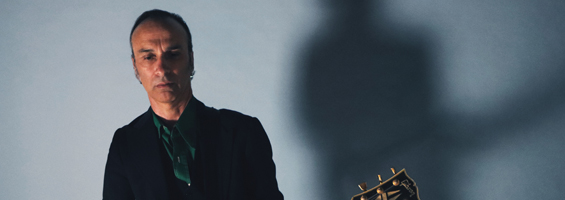
Cam Butler (#4: Ambient / Alternative: Spirits Flying Home, Cam Butler)
I saw a winter exhibition this year at the Geelong Art Gallery, a retrospective of works by renowned Melbourne artist Janenne Eaton. She's been working since the late '70s. Very inspiring. Her pencil architectural styled drawings from the early '80s are amazing. I've also been listening to a recent album from Abul Mogard, In a Few Places Along the River. I really like how they approach composition and mood; it's very musical and takes you on a total musical journey.
photo: Mikel Healey Photography
Laurie Christman (#15: Classical [Instrumental], Quartet / Ensemble / Orchestra: Running With Horses, Navona Records)
In 2025 I discovered an exquisite piece of music while watching an exceptional young ballerina, Sylvie Winn Szyndlar, who was competing in the Youth America Grand Prix. She was performing a modern choreography to a segment of Rita Strohl's "Solitude" for piano and cello, this particular recording performed by cellist Héloïse Luzzati and pianist Célia Oneto Bensaid (“Solitude" can be found on volume two of a three-volume set of Strohl's works on the French label La Boîte à Pépites, which is dedicated to promoting the works of women composers). Strohl lived from 1865 to 1941, but her magnificent and soulful piece was unknown to me until I watched Sylvie's dance performance and interpretation of "Solitude." I have never seen a young ballerina perform with such depth of emotion, and the sheer brilliance of her physical abilities is beyond comprehension. The pairing of her physical talent with the passionate and intensely moving music by Strohl transported me to another place.
photo: Colorado Jazz Repertory Orchestra
Colorado Jazz Repertory Orchestra (#14: Jazz: Golden Lady, Colorado Jazz)
(Drew Zaremba, Artistic Director, Colorado Jazz Repertory Orchestra) There is so much to be inspired by! Right now, I have to say I'm consistently inspired by the performances of the Denver ballet company Wonderbound. I can't say I was a dance person before, but having seen several shows, I am very much now a dance person! In particular, I really enjoyed their "Rock Ballets,” featuring music from Queen, Rolling Stones, and David Bowie. I'm currently a little obsessed with storytelling through shorter unrelated pieces of music as opposed to a more formal film or opera that was designed to tell a story.
Sarah Moulton Faux (#17: Classical [Vocal]: Yuliya: Forgotten Songs of Julia Weissberg Rimsky-Korsakov, Azica Records)
I think of the recording industry as building a digital archive for current and future generations of classical music as we know it. Therefore I feel called to record works that have not previously been recorded by women composers so that their voices are a part of that legacy. Right now I'm listening to the recordings of soprano/composer Patrice Michaels, specifically her album Songs of the Classical Age (Cedille Records). She performs twenty-seven arts songs from the Classical period by composers ranging from Haydn, Beethoven, and Mozart to the Chevalier de Saint-Georges, Sophie Westenholz, Maria Theresia von Paradis, and Anna Amalia von Sachsen-Weimar.
Not only is it beautifully performed, I also appreciate how unselfconsciously Patrice pairs these lesser known composers with the titans of the period. Songs of the Classical Age came out in 1999, and listening to it now in 2025 I had never heard of most of the women composers on it and the Chevalier de Saint-Georges has only recently experienced a resurgence of interest in his work in the past few years. It's a classic example of what musicologist Paula Higgins refers to as “recurrent cycles of amnesia” of music by women composers (and other under-represented groups), with each subsequent generation, unaware of the work of their predecessors, having to ‘"reinvent the wheel.” I hope that in this age of digital music streaming that we can break this cycle and establish an accessible through-line of women composers and their work so that all musicians may benefit by knowing their own history.
Stephen Horne (#19: Classical [Instrumental], Quartet / Ensemble / Orchestra: The Manxman, Ulysses Arts)
Watching One Battle After Another presented on a huge screen in a rare film format (VistaVision) was exhilarating. The unpredictable story, vivid performances, and chaotic mood swings, all combined with Jonny Greenwood's imaginative score, produced the kind of boundary-pushing film that Hollywood rarely makes any more.
Maria Kaushansky (#16: Jazz: Northbound to Finch, Flat 6th Records)
One of the most interesting and unique TV shows that I've seen in a long time and really enjoyed this year was Severance. Theodore Shapiro's theme is hauntingly beautiful, and I've incorporated the show's theme and some other music that I discovered on the show, "The Cat" by Jimmy Smith and Les McCann's "Burnin' Coal,” into my setlists.
Additionally, an album that I listened to a great deal this year and really recommend was by Connecticut-based Charles Sutton, who's spent a great part of his life living in Ethiopia and studying its language and music. On this recording, Reunion, he's joined by Melaku Gelaw and Getamesay Abbebe, and he sings and plays the mesenko.
Yosef Gutman Levitt (#5: Jazz: River of Eden, Soul Song Records)
Favourite literary work: This year, I found myself returning again and again to the Tanya by Rabbi Schneur Zalman of Liadi. A particular teaching from its fifth chapter has been a surprising source of clarity for me as an artist. It speaks of the pnimiyut haratzon, the innermost will, which begins as a pure, simple desire on high. As this spiritual light descends into our world, it becomes filtered through countless layers, and the byproduct of this process is physicality—the mountain of details that make up our reality. I see this in my own life. My innermost will is simple: to make and share music. But to manifest that one desire, I must engage with an overwhelming number of details: the lights, the sound, the venue, marketing, scheduling, rehearsals, even paying the gas bill. The Tanya teaches that the deeper the inner will, the further it “falls” into this exile of details. But the revelation is that these details are not a distraction from the will: they are inextricably connected to it. This has changed how I see the mundane work of being an artist. Knowing the true proportions of things allows me to address every detail with full-heartedness, understanding that without them, my inner will would remain silent. They are meant to be there, and in their own way, they are holy.
Favourite piece of music: One that has stayed with me this year is “Venice” from the 1981 ECM album Dawn Dance by the enigmatic South African guitarist Steve Eliovson and featuring Collin Walcott on percussion. Eliovson's music re-entered my life in a moment of wonder. While working on a piece, a violinist I had brought in, Oren Tsur, mentioned that our song reminded him of Eliovson—an obscure reference for anyone not steeped in the avant-garde jazz of that era, present company included. Curious, I searched for Steve online and found nothing. Several weeks later, I tried again. This time, a new video had been posted just days prior: the “Levaya,” or Jewish burial, of Steve Eliovson. The video showed a sparse funeral. Steve had passed away alone, having been out of the public eye for over forty years. This discovery, in the very week of his passing, set in motion a remarkable chain of events. It led me to connect with the people who found him and to help arrange for his proper burial and headstone in South Africa, all from my home in Jerusalem. I felt like our souls connected across time and space: a piece of music, a forgotten album, became the catalyst for ensuring a fellow musician was laid to rest with dignity. It's a story that reminds me that “No one is forgotten nor cast away in this world.”
Will Liverman (#10: Classical [Vocal]: The Dunbar/Moore Sessions: Complete Collection, Lexicon Classics)
I'm late to the party with Cécile McLorin Salvant's The Window from 2018, but discovering it this year feels exactly right. The piano writing is intimate and inquisitive, never just accompaniment but always in conversation, and her singing feels fearless in its restrained telling of stories through colour and intention rather than volume. As I continue my search to listen more deeply and understand the jazz soundscape, this album feels like a masterclass in how curiosity, space, and honesty can swing just as hard as virtuosity.
Deborah Martin (#3 Ambient / Alternative: Rendering Time, Spotted Peccary Music)
I recently attended a Christmas Concert at the Palais Prinz Carl in Heidelberg, Germany. Two performers, a mezzo-soprano and baritone, were accompanied by a concert pianist. They were absolutely wonderful, performing works of Mozart, Tchaikovsky, and Bizet. The second half of the concert consisted of works from Broadway Musicals and a selection of Christmas carols. The song that particularly caught my attention was “Edelweiss,” the last collaborative song written by Rodgers and Hammerstein for the musical The Sound of Music.
I was struck by the simplicity of the melody and the haunting lyrics and felt such a sense of peace infuse its way through me as I listened to the performance. It gave me renewed purpose in the joy that comes from creating music for all to hear. I have profound gratitude for these small moments. I wish for all a sense of peace and blessings of the season into the New Year. May all of us continue to hear the inspiring muses of song.
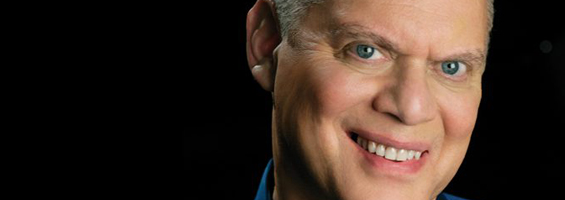
New York Festival of Song (#14: Classical [Vocal]: Schubert Beatles, NYFOS)
(Steven Blier, NYFOS Artistic Director and author of From Ear to Ear: A Pianist's Love Affair with Song) I heard too many beautiful things this year to single out just one, though I would like to mention that the supremely gifted tenor Xabier Anduaga, singing Bellini at the Met, gave me hope for the future. But it was Ian McEwan's latest novel, What We Can Know, that seems to have left the deepest impression. Set in the year 2119, it is a unique combination of literary mystery, futuristic dystopia, and death-haunted romance. McEwan looks deeply at where we are now by imagining what the world might look like in a hundred years. Everything has changed except the human spirit, eternally delicate and indomitable. What We Can Know is complex, profound, and a page-turner—a tremendously skillful piece of writing.
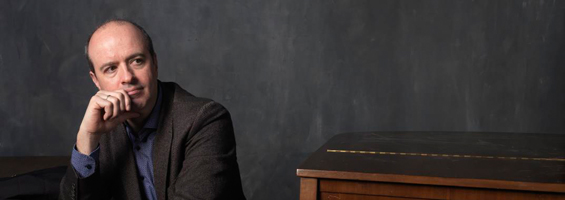
The New York Second (#1: Jazz: Room for Other People, TNYS)
(Harald Walkate) For me the stand-out musical experience of 2025 was the magical Kurt Elling-Yellowjackets concert where they paid tribute to the fusion group Weather Report. A lot of things came together for me: the Yellowjackets (best album: Mirage à Trois) was one of the first 'jazz' groups I started listening to in the early ‘90s; it was through their jazz-rock that I became more interested in other forms of jazz, which ultimately took me to my own jazz composing, and I don't doubt their early influence more than lingers in my own compositions. I'm not a huge fan of jazz singers, but Kurt Elling (best album: Live in Chicago) is the main exception. I discovered him before the rest of the world when I lived in Chicago in the early '00s and he was a regular performer at my favourite venue The Green Mill. It was also in my Chicago days that I started listening to Weather Report (best album: Heavy Weather), mostly because one of my all-time favourite jazz musicians and composers was in it, Wayne Shorter (best album: Night Dreamer). Finally, it was my high-school friend Niels (best album: Licks & Brains: Buzzin') who took me to the concert for my birthday; Niels and I have been playing music together for about four decades, and in many ways we discovered jazz together, so this made the experience complete. The Kurt Elling-Yellowjackets-Weather Report music has yet to be released, so this is not much of a recommendation but those whose interest has been piqued can explore the imposing discographies of aforementioned artists or the highlighted albums and then—just like me—be on the look-out for a new release, hopefully in 2026.
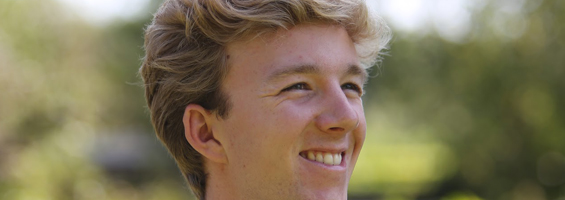
Tim Rumsey (#4: Classical [Instrumental], Solo / Duet / Trio: Transcriptions, Luminate Records)
The Billy Mayerl Piano Transcriptions, Volumes 1-3 played by Eric Parkin (Priory Records, 1993): I'm always on the lookout for new transcriptions of unusual things, and this year I discovered much of the wonderful music of the British pianist, Billy Mayerl. Having arranged some of his band music for my trio to play back in January, I've had Eric Parkin's albums of Mayerl's Piano Transcriptions on repeat all year. A lot of the arrangements spread across the three packed volumes are of famous and recognizable tunes, with both Mayerl's arrangements and Parkin's playing making for a feel-good set of wonderful pieces. As is the case with much original composition, piano transcription is most difficult when it sounds simplest, and Mayerl is the master of this in these arrangements in particular, being so perfectly formed from the original songs.
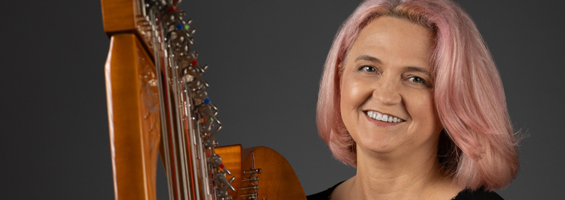
Lauren Scott (#2: Classical [Instrumental], Solo / Duet / Trio: Sea of Stars, Avie Records)
Eadarainn a' Chruit: Between Us the Harp by Scottish harper Karen Marshalsay has been in regular rotation in my CD player ever since its release in September 2025. This is her second solo album, and she performs on three different harps: the traditional gut-strung clarsach, wire-strung harp, and the buzzing, sitar-like bray harp. Most of the recording is solo, but on several tracks she's joined by musicians she's collaborated with over the years, and that long-shared understanding really shines through in the ensemble playing.
At its heart, the album celebrates connections—between musicians, melodies, words, rhythms, people, places, and the living traditions of Scotland and Ireland— with the harp always at the centre. It's a beautiful, deeply warm record that feels like a gentle Scottish embrace from players completely steeped in this music. I keep coming back to it again and again.
Cécile Seraud (#5: Ambient / Alternative: Psykhé, Cécile Seraud)
I think that, faced with the oppressive state of the world and the ever-thickening, breathless atmosphere settling over France, I felt a deep need to return to works that offered me a pure breath of escape and freedom—works that celebrate a simple life lived in harmony with Mother Nature, far from the endless, discordant noise. Works that remind us that one of art's greatest powers is its capacity to refine reality until it becomes an elsewhere of timeless, indisputable beauty.
My daydreams first carried me to Arthur Rimbaud—“Ma Bohème,”“Sensation”— I could almost sense him at my side, a "dreaming little Tom Thumb," following me through my wandering paths, where I scattered not rhymes but musical notes behind me. And with "wind for soles," eager and alive, I roamed the glowing trails, intoxicated by their colours, their scents, their familiar impressions, letting "infinite love" rise "into my soul.” Then Joan Baez arrived—her voice, giving the strength of an irresistible freedom, Diamonds and Rust above all—drawing me into a kind of dizzy, circling reverie, a journey to the world's very edge, an experience almost mystical, almost salvational.
Krešimir Stražanac (#12: Classical [Vocal]: Schubert; Allitsen: Schwanengesang, Hänssler Classic)
A band that really inspires me are from Winnipeg, Canada, The Wailin' Jennys. I love their acoustic music and perfect harmonies, and I've listened to their Bright Morning Stars and 40 Days albums for many years. Otherwise I love listening to vinyl records on my old Sony PS-6750 turntable and Harman-Kardon 730 Twin receiver from the '70s. My favourites on vinyl include albums by The Who. While I don't listen to that much classical when I'm home, any album by pianist Ivo Pogorelic will do: he makes every note count, and my favourites are probably his Pictures at an Exhibition and Chopin albums. I also enjoyed very much an album called Center Stage by the National Symphonic Winds and conductor Lowell Graham.
Rahel Talts (#20: Jazz: New and Familiar, Rahel Talts)
I've been thinking hard about what inspired me this year, and I think what inspired me most was the music for classic movies like Harry Potter and Home Alone, music in those movies written by the incredible John Williams. I rewatched these movies with a fresh perspective and really took notes in my head about how the music is composed, what orchestral arrangements work with which situation, how much you can create and change the whole vibe of the movie with different rhythms, dynamics, mood, using only horns or only strings etc. It really fascinates me, and it is something new that I started intentionally paying attention to this year.
photo: Raphael Weinroth-Browne
Raphael Weinroth-Browne (#2 Ambient / Alternative: Lifeblood, Anamnesis Arts)
Reclaiming Art in the Age of Artifice (Basic Books) by Ottawa-based author J. F. Martel is easily the most fascinating and enthralling book I have read this year—a beautifully written meditation on the enigmatic, timeless nature of authentic art and how it reconnects us with the mystery of existence.
Itoko Toma (#8: Ambient / Alternative: Beside the Moon, Schole Records)
The work I respect most in 2025, or rather always, is Keith Jarrett's The Melody at Night, with You. His tone, composition, concentration—everything is magnificent—and no matter how many times I listen, it moves me with fresh emotion.
A sound filled with compassion. It comforts me time and again, keeps me moving forward, and makes me want to work diligently and pour my heart into my creations.
Phil Tomsett (#12: Ambient / Alternative: Noise Print / The Acceptance Cycle, Fluid Audio)
One of my favourite albums of 2025 was Night Caves by Jolanda Molletta. I'd already really enjoyed her previous release Nine Spells, but Night Caves takes her work somewhere deeper and richer. Released in February, it's been a regular favourite throughout the year. Together with Karen Voigt (with whom she's also collaborated), Molletta is part of a wonderful sub-genre of ambient music featuring wordless, layered, vocal-only ambience. She also performs live with something she calls "Sonic and Visual Spells," works that follow the cycles of nature and the moon.
What I love most is the sense that you're listening to something from both the ancient past and the far future, something intimate and quite simple but also complex and perhaps a little unknowable. Night Caves was released on the UK-based label Whitelabsrec, who have been on a real hot streak this year with many great ambient records. Still, for me, Night Caves is the truly special one.
Sarah Wilson (#19: Jazz: Incandescence, Brass Tonic Records)
Kaveh Akbar's novel Martyr grabbed me this year enough that after reading it on my Kindle, I had to buy a physical copy. The book covers a lot of terrain: addiction, Iranian-American immigrant life in the US, and the experience of being an artist, to name but a few of the topics. For me, I was struck deeply by the insight the book offered into the mind and experience of being an addict. Having grown up in a family rife with addiction, I've never heard such clarity around what it means to recover from addiction, the disconnect between how others perceive you and your own reality. It's always been a mystery for me to place myself in the brain of an addict, and Akbar's honest descriptions opened up that reality to me.
At the same time that he describes harsh realities with addiction, the novel also blossoms with hope and optimism. The novel's ending is literally almost transcendent and illuminating with such a remarkable twist. Akbar's optimism and expansive vision, which he had to search and fight for, resonated with me so much. There is a passage where he discusses dreams and the imperative to maintain dreaming, almost as a form of empowerment that feels so timely given our current US political situation:“Dreams give us voices, visions, ideas, mortal terrors, and departed beloveds. Nothing counts more to an individual, or less to an empire." As an American artist, this concept of dreams, of dreaming gives me hope to still dream, to still create art, to still have vision and hope no matter what is happening outside in the world.
Kate Wyatt (#8: Jazz: Murmurations, Kate Wyatt)
Margaret Atwood's book The Testaments, the sequel to The Handmaid's Tale, has really stuck with me since I read it earlier this year. The current climate of misogynist, homophobic, and transphobic politics, obvious in the States, but broadly evident around the world, casts an ever-present shadow (I think most artists would agree). Atwood's Testaments brings hints of hope and recognition of the power of the underestimated that I have found very empowering. When I first read Handmaid's Tale in high school it seemed like an impossible fantasy. Not so much anymore.January 2026